what year was same sex marriage legalized in the us Join Telegram

The fight for marriage equality in the United States unfolded over decades, marked by legal battles, grassroots activism, and seismic shifts in public opinion. From the first recorded challenges in the 1970s to the historic 2015 Supreme Court ruling, each milestone reshaped the nation’s understanding of love, rights, and justice. The journey was not linear—victories in progressive states like Massachusetts in 2004 clashed with conservative backlash, such as California’s Proposition 8 in 2008, which temporarily stripped same-sex couples of their newly won rights.
Behind every courtroom decision and legislative vote lay ordinary citizens—LGBTQ+ individuals, allies, and legal advocates—who turned personal struggles into a movement. Organizations like the ACLU and Lambda Legal filed groundbreaking lawsuits, while protests from coast to coast demanded visibility and equality. The Supreme Court’s Obergefell v. Hodges decision in 2015 didn’t just legalize same-sex marriage nationwide; it forced a reckoning with America’s evolving identity, leaving behind a legacy of both celebration and unresolved debates over religion, tradition, and the limits of law.
The Historical Timeline of Same-Sex Marriage Legalization in the U.S.: Key Events Leading to National Recognition
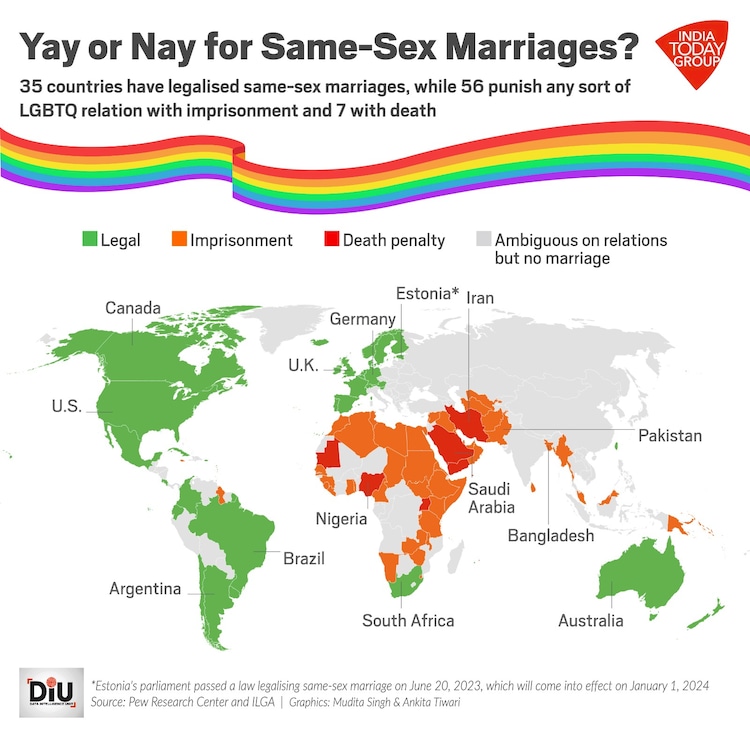
The legalization of same-sex marriage in the United States represents one of the most transformative civil rights victories of the 21st century. This journey, marked by legal battles, grassroots activism, and shifting cultural attitudes, unfolded over decades before culminating in the landmark Obergefell v. Hodges Supreme Court decision in 2015. The path to national recognition was neither linear nor uniform, with progress varying dramatically across states and fueled by both judicial rulings and legislative actions. Understanding this timeline reveals how activism, legal strategy, and societal evolution converged to redefine marriage rights in America.
The fight for same-sex marriage began long before its legalization, rooted in early challenges to discriminatory laws and evolving interpretations of constitutional rights. Key milestones—such as Baker v. Nelson (1971), the first major court case addressing marriage equality, and the eventual overturning of DOMA (Defense of Marriage Act) in 2013—demonstrate the incremental yet relentless progress toward equality. State-level victories, beginning with Massachusetts in 2004, set precedents that influenced nationwide debates, while federal setbacks, like Proposition 8 in California (2008), highlighted the complexity of balancing state and federal authority. This section explores the chronological progression of these events, emphasizing the roles of legal advocacy, public demonstrations, and regional disparities in shaping the landscape of marriage equality.

Early Legal Challenges and the Foundation of Modern Advocacy (1971–1996)
The modern fight for same-sex marriage rights in the U.S. traces its origins to 1971, when Minnesota’s Supreme Court denied a petition from Jack Baker and James McConnell to legally marry, citing no "fundamental right to marry" for same-sex couples. The case, Baker v. Nelson, was dismissed without addressing the constitutional merits, but it marked the first time a court explicitly rejected marriage equality. This setback did not deter activists, who soon established organizations like the Mattachine Society and later the American Civil Liberties Union (ACLU) and Lambda Legal to challenge discriminatory laws systematically.
By the 1980s and 1990s, legal strategies evolved to focus on equal protection clauses of state constitutions and the Due Process Clause of the U.S. Constitution. In 1993, Hawaii’s Supreme Court ruled in Baehr v. Lewin that the state’s ban on same-sex marriage might violate the Hawaii Constitution, prompting a backlash from conservative lawmakers. To preempt further legal challenges, Congress passed the Defense of Marriage Act (DOMA) in 1996, defining marriage federally as a union between one man and one woman while allowing states to deny recognition to same-sex marriages performed elsewhere. DOMA became a focal point for opponents of marriage equality, framing the issue as a matter of federal versus state rights.
Table of Contents
- The Historical Timeline of Same-Sex Marriage Legalization in the U.S.: Key Events Leading to National Recognition
- Early Legal Challenges and the Foundation of Modern Advocacy (1971–1996)
- State-Level Victories and the Rise of Legal Precedents (2000–2011)
- Federal Intervention and the Path to National Legalization (2012–2015)
- The Supreme Court’s Role: Landmark Cases That Shaped National Marriage Equality
- Foundational Precedents: Lawrence v. Texas and the Collapse of Anti-Sodomy Laws
- Chipping Away at DOMA: United States v. Windsor and Federal Recognition
- Comparative Analysis: United States v. Windsor vs. Obergefell v. Hodges
- State-Level Battles: How Individual Jurisdictions Defined Marriage Rights Before Federal Recognition
- State-by-State Overview of Same-Sex Marriage Legalization
Grassroots activism during this period included protests like the 1979 White Night Riot in San Francisco, where LGBTQ+ activists stormed City Hall to demand equal rights, and the 1993 March on Washington for Lesbian, Gay, and Bi Equal Rights and Liberation, which drew over 100,000 participants. These events laid the groundwork for future campaigns, demonstrating the power of collective action in influencing legislative and judicial outcomes.
State-Level Victories and the Rise of Legal Precedents (2000–2011)
The turn of the millennium saw a surge in state-level legal challenges, with Massachusetts becoming the first jurisdiction to legalize same-sex marriage in 2004 following the Goodridge v. Department of Public Health decision. The Massachusetts Supreme Judicial Court ruled that excluding same-sex couples from marriage violated the state constitution’s equal protection clause, setting a precedent that emboldened activists in other states. This victory was met with resistance, including boycotts and legislative efforts to overturn the ruling, but it also inspired similar lawsuits in states like Vermont, Connecticut, and Iowa.
A chronological table of key events during this era highlights the patchwork of progress:
| Year | Event/Case | Jurisdiction/State | Significance or Impact |
|---|---|---|---|
| 2004 | Goodridge v. Department of Public Health | Massachusetts | First state to legalize same-sex marriage via court order, establishing a precedent for equal protection arguments. |
| 2008 | In re Marriage Cases and Proposition 8 | California | California Supreme Court legalized same-sex marriage in May 2008, but Proposition 8, a voter-approved ballot initiative, reversed it in November. This led to nationwide legal battles. |
| 2009 | Iowa Supreme Court rules in Varnum v. Brien | Iowa | Second state to legalize same-sex marriage, further weakening DOMA’s federal defense. |
| 2010 | Connecticut and Vermont legalize same-sex marriage | Connecticut, Vermont | Both states passed legislation legalizing marriage equality, with Vermont becoming the first via legislative action. |
| 2011 | New York legalizes same-sex marriage via Marriage Equality Act | New York | First state to legalize marriage equality through legislative action, signaling growing political support. |
| 2011 | Washington and Maryland legalize same-sex marriage | Washington, Maryland | Washington became the first state west of the Mississippi to legalize marriage equality via referendum, while Maryland passed it legislatively. |
The Proposition 8 campaign in California exemplified the political and cultural divisions of the era. Proponents argued that marriage was a "traditional institution," while opponents framed the issue as a matter of equal dignity and civil rights. The legal battle over Proposition 8 eventually reached the U.S. Supreme Court in Hollingsworth v. Perry (2013), where the Court ruled that private parties lacked standing to defend the initiative, effectively reinstating marriage equality in California.
Grassroots movements during this period included the 2008 "I Do" marches in Washington, D.C., where thousands protested DOMA and Proposition 8, and the 2010 National Equality March, which drew over 200,000 participants to demand federal recognition of same-sex marriages. These events amplified public support and pressured lawmakers to take action.
Federal Intervention and the Path to National Legalization (2012–2015)
The early 2010s marked a turning point in the federal recognition of same-sex marriage, with two landmark Supreme Court cases: United States v. Windsor (2013) and Obergefell v. Hodges (2015). In Windsor, the Court struck down Section 3 of DOMA, which had denied federal benefits to same-sex married couples. Justice Anthony Kennedy’s majority opinion declared that DOMA was unconstitutional because it denied same-sex couples "the right to participate fully and equally in the institution of marriage." This decision invalidated DOMA’s federal definition of marriage and required the federal government to recognize state-legalized same
The Supreme Court’s Role: Landmark Cases That Shaped National Marriage Equality
The legal battle for same-sex marriage in the United States reached its defining moment in the Supreme Court, where a series of landmark rulings dismantled federal and state barriers to equality. These cases did not emerge in isolation; each built upon precedent, chipped away at discriminatory laws, and redefined constitutional interpretations of marriage under the Fourteenth Amendment. The Court’s rulings reflected evolving societal norms, but they also sparked fierce dissent, reshaping debates over states’ rights, religious freedom, and the role of the judiciary in social progress. From the decriminalization of same-sex intimacy in Lawrence v. Texas (2003) to the nationwide legalization of marriage in Obergefell v. Hodges (2015), the Court’s decisions created a legal framework that forced America to confront its contradictions—between tradition and equality, federal authority and state sovereignty, and individual rights versus collective morality.
Foundational Precedents: Lawrence v. Texas and the Collapse of Anti-Sodomy Laws
Before marriage equality became a national issue, the Supreme Court had to dismantle the legal infrastructure that criminalized same-sex relationships themselves. Lawrence v. Texas (2003) marked the beginning of the end for state sodomy laws, which had been used to persecute LGBTQ+ individuals for decades. The case centered on John Lawrence and Tyron Garner, two men arrested in Houston for engaging in consensual sexual activity in their private home. The Court, in a 6–3 decision, struck down Texas’s sodomy law, ruling that it violated the Due Process Clause of the Fourteenth Amendment by intruding on personal liberty without a rational basis.
The majority opinion, written by Justice Anthony Kennedy, explicitly rejected the state’s argument that moral disapproval justified criminalization. Instead, Kennedy framed the decision within the broader context of liberty and dignity, citing earlier cases like Roe v. Wade (1973) and Planned Parenthood v. Casey (1992). The opinion stated:
"Liberty presumes an autonomy of self that includes freedom of thought, belief, expression, and certain intimate conduct. The Texas statute furthers no legitimate state interest which can justify its intrusion into the personal and private life of the individual."
This ruling had immediate ripple effects. Within months, courts in multiple states invalidated similar sodomy laws, including in Florida, Georgia, and Michigan. While Lawrence did not address marriage, it laid the groundwork for future challenges by establishing that consensual same-sex relationships deserved constitutional protection. The decision also emboldened LGBTQ+ activists to push for broader recognition, including the right to marry. As Justice Kennedy later wrote in Obergefell, "Lawrence held that the liberty protected by the Fifth Amendment’s Due Process Clause includes certain personal choices central to personal dignity and autonomy, including intimate choices."
Chipping Away at DOMA: United States v. Windsor and Federal Recognition
The next critical step came in United States v. Windsor (2013), which targeted the Defense of Marriage Act (DOMA), a federal law signed by President Bill Clinton in 1996 that defined marriage as a union between one man and one woman for federal purposes. The case involved Edith Windsor, an 83-year-old widow who was forced to pay $363,000 in estate taxes after her spouse, Thea Spyer, passed away. Because DOMA denied federal recognition of their marriage (legalized in New York in 2011), Windsor was ineligible for the marital exemption on estate taxes.
The Supreme Court, in a 5–4 decision, struck down Section 3 of DOMA as unconstitutional under the Equal Protection Clause of the Fifth Amendment. Justice Kennedy’s majority opinion argued that DOMA violated principles of equal dignity and fairness, noting that it imposed a "stigma" on same-sex couples by denying them the 1,138 federal benefits, protections, and responsibilities tied to marriage. The Court rejected the argument that states could define marriage for federal purposes, stating:
"The principal purpose and the necessary effect of DOMA was to demean the status and injury the dignity of same-sex couples. DOMA forces same-sex couples into an unstable position of being in a second-tier marriage. The differentiation demeans the couple, whose primary desire is for equality of treatment and concern."
While Windsor did not legalize same-sex marriage nationwide, it had profound immediate effects: - Federal benefits: Over 1,000 federal programs, including Social Security, immigration rights, and healthcare, began recognizing same-sex marriages performed in states where they were legal. - State-by-state momentum: After Windsor, public support for same-sex marriage surged, with polls showing 58% of Americans in favor by 2013 (up from 36% in 2006). States like Delaware, Rhode Island, and Minnesota legalized marriage shortly after. - Legal strategy shift: The case emboldened plaintiffs in pending marriage cases (e.g., Hollingsworth v. Perry and Obergefell) to argue that denying marriage licenses violated the Equal Protection Clause.
Comparative Analysis: United States v. Windsor vs. Obergefell v. Hodges
While both cases centered on the Fourteenth Amendment, their legal reasoning, scope, and societal impacts differed significantly. Below is a comparative breakdown:
| Aspect | United States v. Windsor (2013) | Obergefell v. Hodges (2015) | Key Differences | ||||||||||||||||||||||||||||||||||||||||||||||
|---|---|---|---|---|---|---|---|---|---|---|---|---|---|---|---|---|---|---|---|---|---|---|---|---|---|---|---|---|---|---|---|---|---|---|---|---|---|---|---|---|---|---|---|---|---|---|---|---|---|
| Legal Basis | Fifth Amendment Due Process Clause (equal protection under federal law) | Fourteenth Amendment Due Process and Equal Protection Clauses (state-level constitutional rights) | Windsor focused on federal discrimination; Obergefell addressed state-level denial of marriage licenses. | ||||||||||||||||||||||||||||||||||||||||||||||
| Scope of Ruling | Invalidated Section 3 of DOMA, requiring federal recognition of same-sex marriages legalized by states. | Mandated nationwide recognition of same-sex marriage, requiring all states to issue licenses and recognize out-of-state marriages. | Windsor was a narrow federal remedy; Obergefell was a broad constitutional mandate. | ||||||||||||||||||||||||||||||||||||||||||||||
| Legal Reasoning |
|
|
Windsor relied on discrimination analysis; Obergefell framed marriage as an inherent liberty. | ||||||||||||||||||||||||||||||||||||||||||||||
| Immediate Societal Impact |
|
|
Leave a Comment
Comments are moderated before appearing. The data you submit is processed according to the Privacy Policy of Inhonorofdesign.