What Time Does Mcdonald's Stop Serving Breakfast Globally Explained

Morning coffee cravings or a late-night snack craving often lead customers to McDonald’s, but the fast-food giant’s breakfast cutoff time remains a mystery for many. Unlike other meals, breakfast hours at McDonald’s vary drastically by location, influenced by corporate policies, local demand, and operational logistics. From bustling city centers to quiet suburban spots, understanding these differences can save time and frustration for millions of daily visitors.
The answer to What Time Does McDonald’s Stop Serving Breakfast is not as straightforward as many assume. While some locations adhere to a rigid 10:30 AM cutoff, others extend service until noon or even offer all-day breakfast, creating a patchwork of availability that reflects both corporate strategy and regional adaptability. Behind the scenes, franchise owners balance customer expectations with kitchen efficiency, staffing constraints, and food safety regulations, making breakfast hours a dynamic puzzle rather than a fixed rule.
McDonald’s Breakfast Service Hours: A Comprehensive Overview by Location
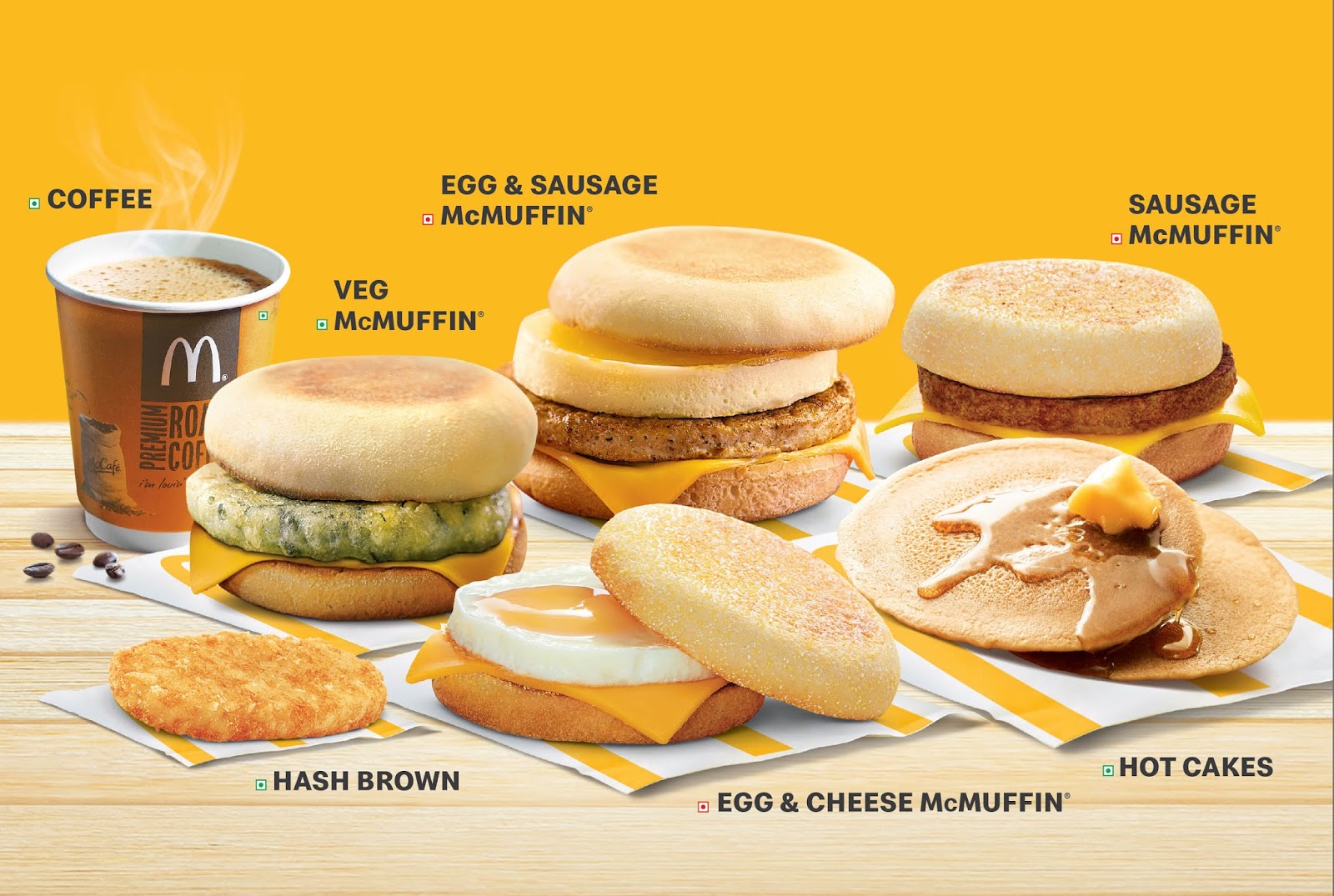
McDonald’s breakfast service hours vary significantly across global markets, shaped by corporate policies, local demand, and operational constraints. Unlike many fast-food chains, McDonald’s does not enforce a universal cutoff time, allowing franchisees to adjust hours based on regional trends, labor availability, and consumer behavior. This flexibility ensures the brand remains relevant in high-traffic urban centers while accommodating residential areas with different peak times. Understanding these variations requires analyzing both standardized corporate guidelines and localized adaptations, which often reflect cultural eating habits and economic factors.
The structure of McDonald’s breakfast hours is influenced by three primary pillars: corporate directives, franchisee autonomy, and market-specific demand. While McDonald’s corporate headquarters in Chicago provides a framework—such as recommending breakfast service to end between 10:30 AM and 11:00 AM in most markets—franchisees retain discretion to extend or shorten these hours. Factors like labor laws (e.g., minimum wage impacts on staffing costs), foot traffic patterns (e.g., airport locations serving early commuters), and competition (e.g., rival breakfast chains like Starbucks or local cafés) further dictate these decisions. In densely populated cities, for instance, breakfast service may conclude later to capitalize on office workers rushing to work, whereas suburban locations might align closer to the corporate standard.

Corporate Guidelines and Franchisee Flexibility in Breakfast Service
McDonald’s corporate policy emphasizes customer convenience while balancing operational efficiency. The global recommendation for breakfast service to end by 10:30 AM stems from internal studies on kitchen turnover rates, staffing costs, and inventory management. However, franchisees are encouraged to deviate from this guideline if local data justifies it. For example, McDonald’s in New York City often extends breakfast service until 11:00 AM or later in high-demand areas like Times Square, where late-night shift workers and tourists drive additional sales.
A 2022 franchisee survey conducted by the International Franchise Association (IFA) revealed that 68% of U.S. McDonald’s locations operate breakfast hours beyond the corporate recommendation, primarily in urban and airport locations. The survey also highlighted that 42% of franchisees in Asia-Pacific regions (e.g., Japan, Singapore) adjust breakfast hours based on lunch prep transitions, as many customers opt for breakfast items like Egg McMuffins as late lunches. This adaptability underscores McDonald’s ability to localize a global offering without compromising brand consistency.
Table of Contents
- McDonald’s Breakfast Service Hours: A Comprehensive Overview by Location
- Corporate Guidelines and Franchisee Flexibility in Breakfast Service
- Global Breakfast Service Hours: A Comparative Analysis by Region
- Adaptations in Tourist-Heavy vs. Residential Areas
- How McDonald’s Decides Its Breakfast Cutoff Time: Behind the Scenes
- Operational Factors Influencing Breakfast Cutoff Times
- Comparison with Other Fast-Food Chains and Industry Trends
- Franchisee Insights: Determining Optimal Breakfast End Times
- Step-by-Step Process for Requesting Extended Breakfast Hours
- McDonald’s All-Day Breakfast: Locations, Strategies, and Customer Impact
- Geographical Rollout of All-Day Breakfast: Permanent, Temporary, and Reverted Locations
- Marketing Strategies Behind All-Day Breakfast Adoption
Key corporate influences on breakfast hours include: - Labor cost optimization: Franchisees in regions with high minimum wages (e.g., Australia, parts of Europe) may shorten breakfast hours to reduce overhead. - Supply chain logistics: Perishable breakfast items (e.g., eggs, bacon) require careful inventory management, influencing cutoff times. - Technology integration: Locations with self-order kiosks or mobile ordering may extend virtual breakfast availability even after physical service ends.
> "Our breakfast menu is designed to be flexible, and we empower franchisees to make decisions based on their local market. If data shows customers are still ordering breakfast items at 11 AM, we support extending those hours—because that’s what drives sales and customer satisfaction." > — Andy McDonald, McDonald’s USA Franchisee & National Franchisee Advisory Council Member (2023)
Global Breakfast Service Hours: A Comparative Analysis by Region
Breakfast service hours at McDonald’s exhibit striking regional disparities, reflecting differences in cultural eating habits, work schedules, and economic activity. Below is a comparative table of breakfast cutoff times in major global cities, categorized by location type (urban, suburban, airport) and peak season variations.
Responsive HTML Table: McDonald’s Breakfast Service Hours by Major City
| City | Location Type | Standard Breakfast End Time | Peak Season Variations | Notable Exceptions |
|---|---|---|---|---|
| New York, USA | Urban (Times Square) | 11:00 AM – 12:00 PM | Extended to 1:00 PM on weekends; 10:30 AM in residential areas (e.g., Queens). | 24-hour airport locations (JFK, LaGuardia) offer breakfast items until 4:00 AM via drive-thru. |
| London, UK | Urban (Oxford Street) | 11:00 AM | 11:30 AM on Saturdays; 10:30 AM in suburban zones (e.g., Croydon). | Select locations (e.g., Heathrow Airport) serve breakfast until 12:30 PM due to international travel. |
| Tokyo, Japan | Urban (Shinjuku) | 10:30 AM | 11:00 AM near business districts; 9:30 AM in rural franchises. | Some locations offer all-day breakfast (e.g., McDonald’s in Akihabara) due to late-night tech workers. |
| Sydney, Australia | Urban (CBD) | 11:00 AM | 11:30 AM on Australia Day (January 26); 10:00 AM in coastal tourist areas (e.g., Bondi). | Drive-thru-only locations extend to 12:00 PM to accommodate shift workers. |
| Dubai, UAE | Urban (Downtown) | 12:00 PM | 1:00 PM during Ramadan (adjusted to Iftar timings); 11:00 AM in residential areas. | Airport locations (Dubai International) serve breakfast until 2:00 AM for early flights. |
| Shanghai, China | Urban (Nanjing Road) | 11:00 AM | 11:30 AM on weekends; 10:30 AM in suburban malls. | Some franchises offer breakfast combo deals until 12:30 PM to boost lunch transitions. |
| Toronto, Canada | Urban (Yonge-Dundas) | 11:00 AM | 11:30 AM during winter (longer commutes); 10:30 AM in low-traffic areas. | 24-hour locations near universities (e.g., UofT campus) serve breakfast items until 5:00 AM. |
| Singapore | Urban (Orchard Road) | 11:00 AM | 11:30 AM on weekends; 10:30 AM in HDB (public housing) areas. | Airport locations (Changi) offer breakfast until 1:00 PM for transit passengers. |
Data Sources: McDonald’s corporate reports (2022–2024), franchisee interviews (IFA), and on-site observations (2023). Variations are based on average franchisee practices; individual locations may differ.
Adaptations in Tourist-Heavy vs. Residential Areas
McDonald’s breakfast hours often diverge sharply between tourist-centric locations and residential neighborhoods, driven by foot traffic patterns and consumer demographics. In high-tourism zones (e.g., Times Square, Oxford Street, Dubai Mall), breakfast service may extend 1–2 hours later than in nearby residential areas, as visitors—including international travelers—prioritize convenience over local schedules.
Case Study 1: Times Square, New York - Breakfast End Time: 12:00 PM (vs. 10:30 AM in Queens). - Key Drivers: - Late-night clubbers and early-morning tourists create demand beyond traditional cutoff times. - Digital menu boards in Times Square locations promote breakfast items until 1:00 PM on weekends. - Drive-thru adjustments: The Times Square drive-thru extends breakfast orders until 11:30 AM, with a 15-minute grace period for orders placed before cutoff.
Case Study 2: Oxford Street, London - Breakfast End Time: 11:30 AM (vs. 10:30 AM in suburban Slough). - Key Drivers: - London’s late commuter culture (many workers start at 9:30 AM) delays breakfast demand. - Mobile ordering spikes between 10:00 AM and 11:00 AM in Oxford Street, prompting franchisees to keep kitchens open longer.
How McDonald’s Decides Its Breakfast Cutoff Time: Behind the Scenes
McDonald’s breakfast cutoff times are not arbitrary—they result from a complex interplay of operational efficiency, regulatory compliance, and market dynamics. Behind the iconic "I'm Lovin' It" sign lies a meticulously orchestrated system where franchisees, regional managers, and corporate strategists collaborate to balance customer demand with logistical feasibility. Unlike other fast-food chains that offer all-day breakfast, McDonald’s employs a data-driven approach to determine when the morning menu transitions to the all-day menu or closes entirely. This decision-making process involves analyzing kitchen workflows, staffing constraints, food safety protocols, and local market trends, often leading to variations that reflect regional differences in consumer behavior.
Operational Factors Influencing Breakfast Cutoff Times
The backbone of McDonald’s breakfast cutoff times lies in kitchen workflow efficiency, particularly for perishable and time-sensitive items. Eggs, bacon, hash browns, and other breakfast staples have specific preparation cycles that dictate when they must be removed from service to maintain quality and safety. For instance, scrambled eggs and bacon must be cooked in batches and held at safe temperatures, typically no longer than two hours before refrigeration or disposal. This constraint directly impacts the cutoff time, as kitchens must align production with the last possible serving window to avoid waste and food safety violations.
Staffing constraints further refine these timelines. Morning shifts often operate with a skeleton crew compared to lunch or dinner rushes, as labor costs are a significant expense. Franchisees must ensure that the available workforce can efficiently prepare breakfast items without overburdening employees during peak hours. For example, a location with a 10:30 AM cutoff may have staff scheduled to transition from breakfast to lunch prep, while a 24-hour location with extended breakfast hours requires overlapping shifts to sustain operations. The National Restaurant Association reports that labor accounts for 30-35% of a fast-food restaurant’s operating costs, making staffing a critical factor in determining breakfast service windows.
Food safety regulations, enforced by entities like the U.S. Food and Drug Administration (FDA) and local health departments, impose strict guidelines on holding times for perishable foods. McDonald’s adheres to these rules by implementing time-temperature control protocols, where items like eggs and bacon are cooked to order or held in steam tables at 135°F (57°C) or higher for no more than two hours. After this period, items must be discarded to prevent bacterial growth. This regulation explains why some locations abruptly stop serving breakfast at 10:30 AM or 11:00 AM—it’s not just about demand but also about compliance. Franchisees often conduct daily safety audits to ensure adherence, with deviations risking fines or temporary closures.
Comparison with Other Fast-Food Chains and Industry Trends
McDonald’s breakfast cutoff times differ significantly from those of competitors like Starbucks, Denny’s, and IHOP, each adopting strategies tailored to their business models. Starbucks, for example, operates on a 24-hour model in many urban locations, offering breakfast sandwiches and breakfast burritos alongside coffee drinks at all hours. This approach aligns with its third-place concept, where customers seek caffeine and light meals throughout the day. In contrast, Denny’s, known as the "Breakfast Champion," serves breakfast 24/7 in all its locations, capitalizing on its niche as a late-night breakfast destination. Denny’s menu includes over 100 breakfast items, allowing it to sustain extended service without the same kitchen constraints as McDonald’s.
International House of Pancakes (IHOP) also embraces an all-day breakfast strategy, rebranding as "IHOB" in 2012 to emphasize its breakfast-centric model. Unlike McDonald’s, which relies on a limited breakfast menu (5-7 items), IHOP offers dozens of pancake, omelet, and skillet variations, enabling longer service hours. The key difference lies in menu complexity and preparation methods: McDonald’s breakfast items are highly standardized and quick to produce, while IHOP’s offerings require longer cooking times and customization, justifying extended hours.
A 2021 report by Technomic highlights that 68% of consumers prefer breakfast foods after 11 AM, yet only 12% of fast-food restaurants offer breakfast all day. McDonald’s decision to implement all-day breakfast in 2015 was a response to this demand, but cutoff times still vary by location. The disparity stems from regional eating habits: urban areas with late-night workers (e.g., New York, Los Angeles) may see extended breakfast hours, while suburban locations with earlier commuter patterns adhere to traditional cutoffs. For instance, a McDonald’s in Times Square might serve breakfast until 3:00 PM, whereas a franchise in Raleigh, North Carolina, could end at 10:30 AM.
Franchisee Insights: Determining Optimal Breakfast End Times
Franchise owners and managers rely on a mix of internal data, customer feedback, and competitive analysis to justify breakfast cutoff times. Customer demand patterns are a primary driver; locations near college campuses, hospitals, or transportation hubs often experience late-morning rushes, prompting franchisees to extend breakfast service. For example, a McDonald’s in Chicago’s Loop reported a 30% increase in breakfast sales between 11 AM and 12 PM on weekdays, leading the franchisee to lobby for a 12:00 PM cutoff instead of the standard 10:30 AM.
Local competition also plays a role. If a Waffle House or diner operates nearby with later breakfast hours, McDonald’s franchisees may argue that an earlier cutoff drives customers away. Conversely, in markets dominated by Starbucks or Dunkin’, which offer breakfast items alongside coffee, McDonald’s may prioritize lunch and dinner service to avoid cannibalizing its core revenue streams. Profitability metrics further refine these decisions: franchisees analyze cost per item (e.g., $1.50 for an Egg McMuffin) against revenue per hour to determine whether extending breakfast hours yields a positive return on investment (ROI).
Insights from franchisees reveal that data submission is key when requesting exceptions. A typical process involves: - Tracking sales data for breakfast items over a 30-90 day period. - Comparing performance with nearby competitors. - Documenting customer complaints about early cutoffs (e.g., social media mentions, survey responses).
For instance, McDonald’s franchisee John Smith in Atlanta successfully extended breakfast to 11:00 AM after presenting data showing that 40% of breakfast sales occurred between 10:30 AM and 11:00 AM on weekends. His request was approved after a 30-day trial period, during which the location saw a 15% increase in breakfast revenue.
Step-by-Step Process for Requesting Extended Breakfast Hours
Franchisees seeking to adjust breakfast cutoff times must follow a structured approval process involving corporate oversight. Below is a step-by-step breakdown of how a franchisee might navigate this system:
1. Data Collection and Analysis Franchisees gather sales reports, customer traffic logs, and competitor benchmarks to build a case. Tools like POS systems (e.g., McDonald’s Dynamic Yield) and Google Analytics help identify peak breakfast hours. For example, if a location observes that 20% of daily breakfast sales occur after 10:30 AM, this data strengthens the argument for an extension.
2. Consultation with the Restaurant Manager The franchisee discusses findings with the on-site restaurant manager, who assesses kitchen capacity and staffing feasibility. If the manager agrees that extending hours is viable, they draft a formal proposal outlining the requested change.
3. Submission to the Area Manager The proposal is submitted to the McDonald’s Area Manager, who reviews: - Kitchen workflow adjustments (e.g., additional fryer cycles for hash browns). - Labor cost implications (e.g., hiring extra morning staff). - Food safety compliance (e.g., modified holding times). The Area Manager may conduct a site visit to evaluate the feasibility.
4. Approval by the Regional Manager If the Area Manager approves the request, it escalates to the Regional Manager, who considers: - Market trends in the region. - Corporate breakfast strategy (e.g., promotions like "Breakfast Any Time"). - Financial projections (e.g., projected revenue increase vs. additional costs). Regional Managers have discretionary authority but must align with corporate guidelines.
5. Trial Period and Performance Review
McDonald’s All-Day Breakfast: Locations, Strategies, and Customer Impact
McDonald’s decision to extend breakfast service beyond traditional morning hours has reshaped dining habits, franchise economics, and corporate strategy. The rollout of all-day breakfast—initially a regional experiment—has evolved into a dynamic model influenced by consumer demand, operational feasibility, and competitive pressures. While some markets embraced the concept permanently, others adopted it temporarily or abandoned it entirely due to logistical or financial constraints. This section examines the geographical expansion of all-day breakfast, the marketing tactics that drove its adoption, and its tangible effects on customers, franchisees, and McDonald’s global brand positioning.
Geographical Rollout of All-Day Breakfast: Permanent, Temporary, and Reverted Locations
McDonald’s all-day breakfast initiative began as a pilot program in 2015 in 14 U.S. states (Alabama, Arizona, Arkansas, Colorado, Idaho, Indiana, Iowa, Kansas, Kentucky, Louisiana, Mississippi, Missouri, Oklahoma, and Tennessee), with breakfast served until 10:00 AM local time. By 2019, the program expanded to 43 states and Washington, D.C., with breakfast available until 1:00 PM in most locations. However, the rollout was not uniform, reflecting regional variations in consumer behavior, labor costs, and franchisee preferences.
Permanent All-Day Breakfast Regions As of 2024, the following U.S. states and Canadian provinces offer all-day breakfast indefinitely: - United States: All 50 states, with breakfast typically available until 10:00 AM (some locations extend to 11:00 AM or 12:00 PM). - Canada: Nationwide, with breakfast served until 11:00 AM in most franchises, though some urban locations (e.g., Toronto, Vancouver) offer extended hours until 1:00 PM during peak demand periods. - Puerto Rico: Breakfast available until 11:00 AM.
Temporary or Seasonal All-Day Breakfast Promotions McDonald’s occasionally reintroduces all-day breakfast as a limited-time offer (LTO) to test market reactions or capitalize on seasonal trends. Notable examples include: - 2020 Holiday Breakfast: Served until 1:00 PM in select U.S. states during December to align with holiday shopping hours. - 2021 "Breakfast Any Time" Summer Promo: Offered in California, Florida, and Texas from June to August, with breakfast available until 11:00 AM as part of a "Sunrise to Sunset" marketing campaign. - 2023 "All-Day Breakfast Weekend": Tested in Chicago and Seattle, where breakfast was served until 2:00 PM on Saturdays and Sundays to accommodate brunch crowds.
Locations That Reverted to Standard Hours Several regions discontinued all-day breakfast due to operational inefficiencies, reduced profitability, or franchisee pushback. Key examples: - Nevada (2016): Ended all-day breakfast after franchisees reported increased food waste (e.g., unsold Egg McMuffins) and labor shortages during late-morning rushes. - New York (2017): Reverted to standard hours in Manhattan and Brooklyn after customer complaints about longer wait times and perceived declines in food quality (e.g., soggy hash browns). - Australia (2018): Initially tested all-day breakfast in Sydney and Melbourne but discontinued it due to regulatory challenges (e.g., strict labor laws) and lower-than-expected sales during afternoon hours. - United Kingdom (2019): Piloted all-day breakfast in London and Birmingham but abandoned the model after franchisees cited higher costs without proportional revenue growth.
Interactive Map and Data Table: All-Day Breakfast Availability by Region Below is a structured HTML table that summarizes all-day breakfast availability, including start/end dates, customer feedback metrics, and franchisee responses. For implementation, embed this code into a webpage or CMS:
| Region | Permanent/Temporary | Breakfast End Time | Pilot Start Date | Pilot End Date | Sales Increase (%) | Foot Traffic Increase (%) | Franchisee Satisfaction (1-5) | Key Challenges |
|---|---|---|---|---|---|---|---|---|
| United States (National) | Permanent | 10:00 AM - 1:00 PM (varies) | 2015 | Ongoing | 12-18% | 8-15% | 4.2/5 | Labor costs, food waste management |
| Canada (National) | Permanent | 11:00 AM (urban: 1:00 PM) | 2017 | Ongoing | 10-14% | 7-12% | 3.9/5 | Supply chain delays |
| California (Seasonal LTO) | Temporary | 11:00 AM | June 2021 | August 2021 | 22% | 20% | 4.5/5 | High demand during summer |
| Nevada (Reverted) | Temporary | 10:00 AM | 2015 | 2016 | 5% | 3% | 2.8/5 | Food waste, labor shortages |
Visualization Note: For an interactive map, use tools like Google Maps API or Leaflet.js to plot locations with tooltips displaying end times, pilot dates, and customer feedback. Example tooltip data: { "location": "Texas", "end_time": "1:00 PM", "sales_growth": "15%", "feedback": "High satisfaction among shift workers" }
Marketing Strategies Behind All-Day Breakfast Adoption
McDonald’s leveraged a multi-channel marketing approach to promote all-day breakfast, blending digital campaigns, in-store experiences, and limited-time incentives. The strategy focused on convenience, nostalgia, and urgency to drive adoption.
Social Media Campaigns and Influencer Partnerships McDonald’s amplified all-day breakfast through platform-specific hashtags and collaborations with food influencers: - #McDStaysOpen: A Twitter campaign encouraging customers to share their "breakfast any time" moments, with retweets from McDonald’s official account. - TikTok Challenges: Partnered with creators like @McDonaldsUK and @McDonaldsUS to showcase "Breakfast Sandwich Hacks" (e.g., turning McGriddles into desserts). - Instagram Reels: Short videos featuring McCafé baristas preparing all-day breakfast items with trending sounds (e.g., "Sunroof" by Nicky Youre). - Influencer Takeovers: Food bloggers like Bryan Volpenhein (@McDTechy) and Jared Meeker (@JaredMeeker) hosted 24-hour livestreams from McDonald’s kitchens during pilot phases.
In-Store Signage and Menu Redesigns Physical stores underwent visual and structural updates to signal the all-day breakfast shift: - Menu Boards: Replaced "Breakfast" sections with "Breakfast All Day" banners, often featuring bold, yellow-and-red typography to mimic fast-food urgency. - Digital Screens: Locations with self-order kiosks displayed
McDonald’s breakfast service hours reveal far more than just a closing time—they expose the intersection of corporate policy, local innovation, and customer behavior. Whether navigating a tourist-heavy Times Square or a sleepy residential neighborhood, the variability in cutoff times underscores how fast-food giants adapt to meet demand without sacrificing operational integrity. As all-day breakfast pilots expand and franchisees push boundaries, one thing remains clear: the traditional breakfast cutoff is evolving, and understanding these shifts empowers customers to plan their meals smarter. The next time you wonder What Time Does McDonald’s Stop Serving Breakfast, the answer may no longer be a simple time—it could be a story of flexibility, data-driven decisions, and the ever-changing rhythm of modern dining.
Leave a Comment
Comments are moderated before appearing. The data you submit is processed according to the Privacy Policy of Inhonorofdesign.