What Is An Indian Summer Explained Simply

Autumn’s final whisper arrives not as frost but as warmth—a deceptive burst of sunshine that confuses leaves into clinging longer and farmers into delaying harvests. Known as Indian Summer, this meteorological oddity defies expectations by delivering unseasonable heat weeks after summer’s official farewell, leaving scientists and poets alike captivated by its fleeting yet potent presence. Unlike the predictable march of seasons, Indian Summer emerges as a climatic enigma, blending science with folklore in a dance of atmospheric pressure and cultural memory.
The term traces roots to 17th-century Europe, where early settlers in North America observed how Native American tribes marked its arrival with rituals, while European travelers documented its eerie beauty in diaries. Meteorologists later pinned its cause to high-pressure systems redirecting warm air northward, creating a paradox: crisp air with temperatures soaring above 20°C (68°F) under golden skies. Yet its cultural footprint stretches farther—from Emily Dickinson’s poetic musings to Midwest farmers’ anxious glances at the calendar, wondering if the reprieve will last until frost. What begins as a weather phenomenon becomes a shared human experience, where science meets storytelling in the crisp, hazy afterglow of summer’s last stand.
Defining Indian Summer: Origins, Meteorological Explanation, and Cultural Significance
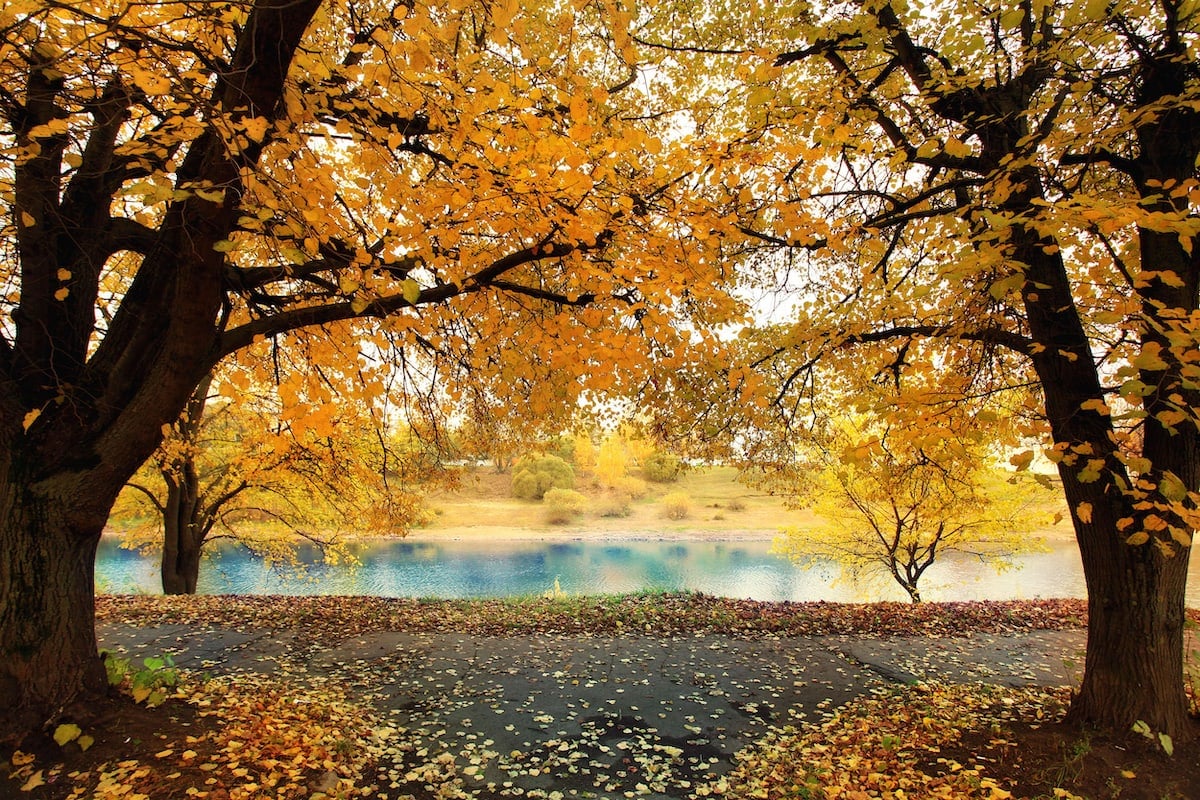
The term Indian Summer evokes images of crisp autumn air, golden sunlight, and an unexpected warmth that lingers long after summer’s official farewell. This meteorological and cultural phenomenon has fascinated scientists, writers, and communities for centuries, blending natural observation with folklore and regional identity. While its precise definition varies by location, Indian Summer represents a distinct climatic event characterized by unseasonably warm temperatures, clear skies, and a fleeting return of summer-like conditions in late autumn. Understanding its origins, atmospheric mechanics, and cultural interpretations reveals how this transient weather pattern has shaped human experiences across continents, from the agricultural cycles of Native American tribes to the poetic musings of European and American writers.
Historical Origins and Evolution of the Term Indian Summer
The phrase Indian Summer emerged in the early 17th century, with its earliest recorded usage attributed to European settlers in North America. According to historical linguistics and meteorological archives, the term likely originated from the Algonquian-speaking Native American tribes, who observed the phenomenon and associated it with the hunting season for deer. Tribes such as the Lenape (Delaware) and Ojibwe noted that this warm interlude in autumn allowed deer to grow thicker coats, making them easier to hunt—a period they referred to as "waap wallaahk" (white deer season) or "waap wuunji" (deer hair turning white). European settlers, unfamiliar with these indigenous names, adapted the concept into their own language, coining Indian Summer to describe the warm spell.
By the 18th century, the term had crossed the Atlantic, appearing in British and Irish meteorological records. In Europe, particularly in regions like England and Germany, similar phenomena were described using local terms such as "Altweibersommer" (Old Women’s Summer) or "Saint Martin’s Summer," referencing the feast day of St. Martin (November 11). These variations highlight how different cultures interpreted the same climatic event through their own lenses—whether tied to religious observances, agricultural practices, or natural cycles. The term’s persistence in North American meteorology underscores its deep cultural embedding, particularly in regions where autumn transitions are abrupt and the warm reprieve feels almost magical.
Meteorological Breakdown: What Triggers an Indian Summer?
Indian Summer is not a standardized meteorological term but rather a colloquial description of a specific weather pattern. Scientifically, it is defined by three primary characteristics: unseasonably warm temperatures, clear skies with minimal cloud cover, and low humidity, often accompanied by crisp, dry air. These conditions typically occur in late autumn—between mid-October and mid-November in the Northern Hemisphere—though regional variations exist.
The phenomenon is primarily driven by high-pressure systems that settle over an area, diverting storm tracks and allowing warm air to descend from higher altitudes. These high-pressure cells, often originating from the subtropical jet stream, push cold Arctic air northward while trapping warmer air near the surface. The result is a temperature inversion, where warmer air overlays cooler air, creating stable atmospheric conditions that suppress cloud formation. This stability leads to the hallmark features of Indian Summer: hazy skies (due to fine particulate matter suspended in the air) and long, golden sunsets, as sunlight scatters through the atmospheric particles.
Temperature thresholds for Indian Summer vary by region but generally range from 15°C to 25°C (59°F to 77°F) in areas like the U.S. Midwest and Canada, where the contrast with surrounding autumn temperatures is stark. In Europe, particularly in the British Isles and Scandinavia, Indian Summer may involve milder warmth, often between 10°C and 20°C (50°F to 68°F), due to the moderating influence of the Atlantic Ocean. Humidity levels drop significantly during these periods, contributing to the "crisp" feel of the air—a sensation amplified by the absence of summer’s typical mugginess.
Cultural Interpretations: Folklore, Literature, and Indigenous Traditions
Indian Summer has inspired countless cultural expressions, serving as a symbol of fleeting beauty, nostalgia, and the cyclical nature of life. In Native American traditions, the warm interlude was not merely a weather event but a critical time for survival. Tribes such as the Cherokee and Iroquois viewed it as a gift from the spirits, a brief respite before winter’s harshness. Hunting parties would venture into the woods, taking advantage of the deer’s active period before their coats thickened for winter. Oral histories and creation stories often wove Indian Summer into narratives about balance and renewal, emphasizing its role in the natural order.
Table of Contents
- Defining Indian Summer: Origins, Meteorological Explanation, and Cultural Significance
- Historical Origins and Evolution of the Term Indian Summer
- Meteorological Breakdown: What Triggers an Indian Summer?
- Cultural Interpretations: Folklore, Literature, and Indigenous Traditions
- Comparative Analysis: Indian Summer vs. Other Autumnal Warmth Phenomena
- The Science Behind Indian Summer: Weather Patterns, Climate Change, and Regional Variations
- Weather Patterns Triggering Indian Summer: Polar Jet Stream and High-Pressure Ridges
- Step-by-Step Meteorological Prediction of Indian Summer Events
- Regional Variations in Indian Summer: From the Midwest to Europe
- Historical Indian Summer Events: Temperature Spikes and Delayed Frost Records
European settlers and later American writers romanticized the phenomenon, framing it as a bittersweet reminder of summer’s end. Henry David Thoreau, in Walden, described Indian Summer as a "second summer," a time when nature seemed to pause and reflect before the inevitable descent into winter. His observations captured the duality of the season: its warmth as a comfort and its brevity as a melancholic omen. Similarly, Emily Dickinson penned verses that juxtaposed the golden light of Indian Summer with the encroaching darkness of autumn, symbolizing life’s transient moments. One of her lesser-known poems reads:
*"The Woods in Autumn are like the Sea— A boundless, boisterous, black, Impenetrable to Man— Then—like the Sea—turns Gray— Then—like the Sea—turns Blue— Then—like the Sea—turns Gold— Then—like the Sea—turns White— And like the Sea—turns Still—"*
Here, Dickinson’s imagery mirrors the shifting hues of an Indian Summer sky, from hazy gray to radiant gold.
In European folklore, the term Altweibersommer (Old Women’s Summer) carried superstitions about witches or the spirits of the dead spinning threads of fate during this time. Some believed that the fine cobwebs seen in the air were the work of these spirits, weaving the last threads of the old year before winter’s silence. This blend of meteorology and mysticism reflects how pre-industrial societies interpreted natural phenomena through cultural lenses, often attributing them to unseen forces.
Comparative Analysis: Indian Summer vs. Other Autumnal Warmth Phenomena
While Indian Summer is unique in its cultural resonance, other seasonal warm spells exist that share similarities but differ in climatic mechanisms. Below is a comparative table outlining key distinctions between Indian Summer and related phenomena:
| Feature | Indian Summer | October Heatwave (Europe) | Summer’s Last Hurrah (Australia) | Veranillo de San Miguel (Spain/Portugal) | |||||||||||||||||||||||||||||||||||||||
|---|---|---|---|---|---|---|---|---|---|---|---|---|---|---|---|---|---|---|---|---|---|---|---|---|---|---|---|---|---|---|---|---|---|---|---|---|---|---|---|---|---|---|---|
| Primary Cause | High-pressure systems diverting cold fronts, creating temperature inversions. | Subtropical high-pressure systems or lingering Mediterranean heat. | Residual summer heat from ocean currents (e.g., East Australian Current). | Azores High pressure system pushing warm air northward. | |||||||||||||||||||||||||||||||||||||||
| Typical Timing | Mid-October to mid-November (Northern Hemisphere). | Late September to early October (Europe). | Late February to early March (Southern Hemisphere). | Late August to early September (Iberian Peninsula). | |||||||||||||||||||||||||||||||||||||||
| Temperature Range | 15°C–25°C (59°F–77°F); crisp and dry. | 20°C–30°C (68°F–86°F); often humid in southern Europe. | 25°C–35°C (77°F–95°F); tropical or subtropical influence. | 25°C–35°C (77°F–95°F); can exceed 40°C (104°F) in heatwaves. | |||||||||||||||||||||||||||||||||||||||
| Atmospheric Conditions | Clear skies, low humidity, atmospheric haze ("Indian Summer haze"). | Partly cloudy, potential for thunderstorms in some regions. | Stable, with possible marine layer or sea breezes. | Clear skies but prone to sudden temperature drops ("false spring"). | |||||||||||||||||||||||||||||||||||||||
| Cultural Significance | Hunting season (Native American), nostalgic farewell to summer (literature). | The Science Behind Indian Summer: Weather Patterns, Climate Change, and Regional Variations
Indian Summer emerges from a complex interplay of atmospheric dynamics, where high-pressure systems, shifting air masses, and seasonal transitions converge to produce a fleeting but memorable reprieve from autumn’s chill. This phenomenon is not merely a random fluctuation in temperature but a result of well-defined meteorological processes, often tied to large-scale atmospheric patterns like the polar jet stream and high-pressure ridges. Understanding these mechanisms reveals why Indian Summer varies in intensity, duration, and predictability across different regions—and how climate change may be reshaping its occurrence. From the agricultural fields of the U.S. Midwest to the vineyards of Germany, the science behind Indian Summer offers insights into broader climate systems, seasonal forecasting, and even human adaptation to weather extremes.
Weather Patterns Triggering Indian Summer: Polar Jet Stream and High-Pressure RidgesThe formation of Indian Summer is primarily driven by the behavior of the polar jet stream, a fast-moving ribbon of air high in the atmosphere that separates cold polar air from warmer subtropical air. During late autumn, the jet stream typically shifts southward, allowing cold Arctic air to dominate mid-latitude regions. However, when a high-pressure ridge—a bulge in the jet stream—develops over a region, it blocks the progression of cold fronts, trapping warm air in place. This ridge often forms due to Rossby waves, large meanders in the jet stream caused by temperature contrasts between polar and tropical air masses. The high-pressure system associated with Indian Summer is characterized by:"Indian Summer is essentially a meteorological rebound effect, where the atmosphere 'overcorrects' after a period of cooling. The high-pressure ridge acts as a lid, trapping heat that would otherwise dissipate." —Dr. Jennifer Francis, Rutgers University Climate Scientist Step-by-Step Meteorological Prediction of Indian Summer EventsPredicting Indian Summer requires a multi-layered approach, combining observational data, atmospheric models, and historical patterns. Meteorologists rely on several tools and methodologies to forecast these events with increasing accuracy: 1. NOAA and Global Forecast System (GFS) Models These models simulate atmospheric conditions by dividing the Earth’s atmosphere into grid cells, each representing variables like temperature, pressure, and humidity. For Indian Summer predictions, meteorologists monitor:"The most reliable predictors are the 500 mb height anomalies and the persistence of the ridge. If the ridge holds for at least 48 hours, we can confidently forecast Indian Summer conditions." —NOAA Meteorologist, Midwest Regional Office Regional Variations in Indian Summer: From the Midwest to EuropeWhile Indian Summer is a global phenomenon, its characteristics vary significantly based on latitude, topography, and local climate regimes. Below is a comparative analysis of how different regions experience this event:
Historical Indian Summer Events: Temperature Spikes and Delayed Frost RecordsDocumented cases of Indian Summer reveal how this phenomenon has shaped weather history, often with dramatic temperature swings. Below is a responsive table highlighting notable events, with data sourced from NOAA, Environment Canada, and the Met Office:
|
Leave a Comment
Comments are moderated before appearing. The data you submit is processed according to the Privacy Policy of Inhonorofdesign.