The Legend Of Ocarina Of Time Redefined Gaming Forever
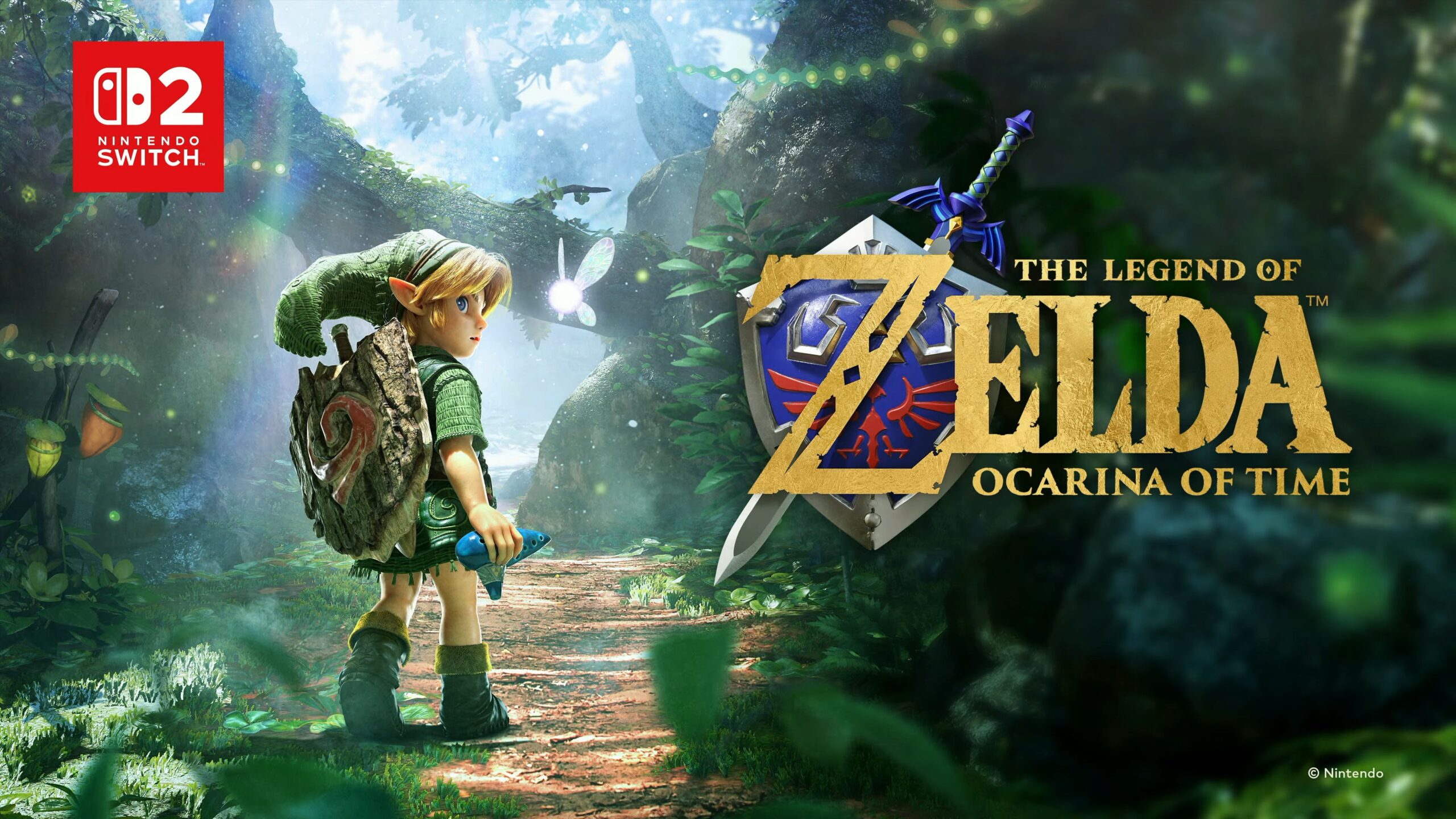
Released in 1998, The Legend of Zelda: Ocarina of Time did not merely enter gaming history—it rewrote its foundational chapters. Nintendo’s masterpiece transformed adventure gaming from a 2D pastime into a three-dimensional epic, blending Shinto mythology with medieval European grandeur while introducing mechanics that would define a generation. The game’s fusion of time-travel narrative, immersive world-building, and revolutionary controls cemented its place as a cultural landmark, influencing everything from storytelling in games to the very way players perceive interactive fiction.
The ocarina, a humble wind instrument, became the key to Hyrule’s destiny, its haunting melodies composed by Koji Kondo transcending gameplay to become an iconic soundtrack. While critics in Japan and the West hailed its innovation, developers faced monumental challenges transitioning Zelda into 3D—a leap that required rethinking every aspect of movement, combat, and environmental interaction. From the naive Kokiri boy Link to the seasoned warrior, the game’s dual timeline wasn’t just a technical marvel but a narrative device that deepened emotional stakes, forcing players to confront the consequences of time itself.
The Legend of Zelda: Ocarina of Time as a Cultural and Narrative Milestone in Gaming

The Legend of Zelda: Ocarina of Time transcended its role as a video game to become a defining cultural artifact of the late 1990s, reshaping expectations for 3D adventure games and solidifying Nintendo’s dominance in interactive storytelling. Released in 1998 for the Nintendo 64, the game marked a pivotal evolution in the Zelda franchise by introducing a fully realized three-dimensional world, a complex narrative framework, and a groundbreaking use of time-travel mechanics. Its influence extended beyond gameplay, embedding itself in Japanese and Western pop culture through its mythological depth, innovative design, and iconic soundtrack. The game’s legacy lies not only in its technical achievements but also in its ability to weave together disparate cultural influences—Shinto mythology, medieval European fantasy, and classical Japanese folklore—into a cohesive, emotionally resonant experience.
The game’s cultural significance cannot be overstated. It bridged the gap between Nintendo’s 2D heritage and the emerging era of 3D gaming, setting a new standard for adventure titles while preserving the franchise’s identity. Its narrative structure, which blends linear progression with nonlinear exploration, became a blueprint for future open-world games. Additionally, Ocarina of Time demonstrated how video games could serve as a medium for rich world-building, where environmental storytelling and lore integration could rival traditional literature or film. The game’s reception in both Japan and the West cemented its status as a critical and commercial phenomenon, earning accolades that cemented its place in gaming history.
Establishing The Legend of Zelda as a Cornerstone of 3D Gaming and Nintendo’s Legacy
Before Ocarina of Time, the Zelda franchise was synonymous with 2D action-adventure games, beginning with The Legend of Zelda (1986) on the NES. The transition to 3D was not without risk; many developers struggled with the technical limitations of the Nintendo 64, which lacked optical discs and relied on cartridges with limited storage. However, Ocarina of Time succeeded where others faltered by reimagining the franchise’s core mechanics—exploration, puzzle-solving, and combat—in a three-dimensional space. The game’s success was not merely technical but also philosophical: it proved that 3D environments could enhance immersion without sacrificing the franchise’s signature charm.
Key innovations included: - Camera Control: The game introduced a dynamic camera system that allowed players to rotate the perspective freely, a feature that became standard in 3D adventure games. This was revolutionary at the time, as earlier 3D games like Super Mario 64 (1996) relied on fixed or semi-fixed camera angles. - Context-Sensitive Controls: Combat and interactions were tied to the ocarina’s song-based mechanics, making the game’s interface intuitive yet deep. For example, pressing buttons in sequence triggered different actions, from opening doors to summoning storms. - World Design: Hyrule was designed as a cohesive, interconnected space where regions like Kakariko Village, Hyrule Castle Town, and the Gerudo Valley felt distinct yet organically linked. This approach influenced later open-world games, including The Elder Scrolls III: Morrowind (2002) and Grand Theft Auto III (2001).
Table of Contents
- The Legend of Zelda: Ocarina of Time as a Cultural and Narrative Milestone in Gaming
- Establishing The Legend of Zelda as a Cornerstone of 3D Gaming and Nintendo’s Legacy
- Narrative and World-Building: Shinto Mythology, Japanese Folklore, and Medieval European Influences
- Time-Travel Mechanics and Nonlinear Progression in Gaming Storytelling
- Gameplay Mechanics and Innovation: A Deep Dive into Ocarina of Time ’s Systems
- Z-Targeting and Camera Controls: Precision in Three Dimensions
- Combat Mechanics: Swordplay, Dungeon Challenges, and Boss Encounters
- Design Philosophy: Insights from Eiji Aonuma and Shigeru Miyamoto
- Dungeon Design: Evolution from A Link to the Past to Ocarina of Time
- The Ocarina’s Dual Role: Gameplay Tool and Narrative Device
- Environmental Storytelling: Hyrule’s Transformation
- Major Dungeons: Themes, Puzzles, and Boss Fights
- Character Development: The Heroes, Villains, and Guardians of Ocarina of Time
- Link’s Silent Evolution: From Childhood Innocence to Heroic Leadership
- Princess Zelda: The Strategist and Protector Beyond the Archetype
- Ganondorf: The Dark Mirror and the Antithesis of Heroism
- Supporting Cast: World-Building Through Relationships and Sacrifice
- World-Building: Hyrule’s Geography, Lore, and Hidden Secrets
- Hyrule’s Major Regions and Their Cultural Influences
- Hyrule’s Lore: The Triforce, Prophecy, and the Role of the Sages
The game’s impact on Nintendo’s legacy is equally profound. Before Ocarina of Time, Nintendo was often perceived as a brand focused on family-friendly, albeit innovative, gaming experiences. The game’s critical and commercial success—it sold over 7.6 million copies worldwide—validated Nintendo’s ability to create mature, story-driven experiences that resonated with both casual and hardcore gamers. It also demonstrated the power of the Nintendo 64, which had initially struggled against the Sony PlayStation in the console wars. By 1998, Ocarina of Time had become a poster child for Nintendo’s creative vision, proving that the company could compete with Sony and Sega in both technology and storytelling.
Narrative and World-Building: Shinto Mythology, Japanese Folklore, and Medieval European Influences
Ocarina of Time’s narrative is a tapestry of cultural influences, drawing heavily from Shinto mythology, Japanese folklore, and medieval European fantasy. These elements are not merely decorative but integral to the game’s themes of time, destiny, and the cyclical nature of existence. The game’s world, Hyrule, is a microcosm of these influences, where sacred groves, ancient ruins, and feudal societies coexist under the shadow of an impending apocalypse.
Shinto Mythology and the Concept of Time Shinto, Japan’s indigenous spiritual tradition, emphasizes harmony with nature (wa) and the veneration of kami (spirits or gods) that inhabit natural phenomena. Ocarina of Time reflects these themes through: - The Triforce: The game’s central motif, the Triforce, mirrors the Shinto concept of kokoro (soul or spirit) divided into three aspects—power, wisdom, and courage—each representing a facet of the divine. This tripartite structure is reminiscent of Shinto’s balance between heaven (takamagahara), earth (kuni), and humanity (hito). - Time as a Sacred Cycle: The game’s time-travel mechanics align with Shinto views of time as cyclical rather than linear. The hero’s journey from childhood to adulthood and back again echoes the matsuri (festival) cycle, where rituals mark transitions between seasons and stages of life. - The Forest Temple and Sacred Groves: Temples like the Forest Temple and the Temple of Time evoke chinju-no-mori (sacred groves) in Shinto, where deities are believed to reside. The game’s emphasis on purification and ritual (e.g., the Water Temple’s trials) reflects Shinto practices of cleansing before entering sacred spaces.
Japanese Folklore and the Hero’s Journey The game’s protagonist, Link, embodies the archetype of the mukokuseki (faceless hero), a trope common in Japanese folklore and literature, such as The Tale of the Bamboo Cutter or Urashima Taro. His journey mirrors the mono no aware (the pathos of things) theme, where the hero’s growth is marked by loss and sacrifice. Key folkloric elements include: - The Ocarina as a Magical Instrument: Ocarinas have roots in traditional Japanese fue (flutes) and shakuhachi (bamboo flutes), instruments often associated with spiritual journeys. The game’s ocarina songs, such as Saria’s Song or Epona’s Song, serve as incantations, much like the utagaki (song inscriptions) in Japanese myths that invoke divine power. - The Shadow of Ganondorf: Ganondorf’s role as a dark mirror to Link draws parallels with yokai (supernatural beings) in folklore, such as onryō (vengeful spirits) or tengu (trickster deities). His corruption of the Triforce of Power reflects the Shinto concept of kegare (spiritual impurity). - The Master Sword and Legendary Arms: The Master Sword’s legend—hidden in a cave for a chosen hero—echoes the koten (ancient tales) of Japan, where sacred swords like Kusanagi (from Kojiki) are entrusted to heroes to restore balance.
Medieval European Fantasy and the Feudal World of Hyrule While the game’s setting is undeniably Japanese, its feudal structure and architectural styles borrow from medieval Europe. Hyrule Castle, with its towering spires and stone walls, resembles European castles like those in The Legend of the Holy Grail or King Arthur lore. The game’s dungeons, filled with traps and puzzles, evoke the labyrinthine castles of medieval fantasy. Even the concept of a "chosen hero" destined to save the kingdom aligns with European legends like El Cid or Sigurd the Dragon-Slayer.
The fusion of these influences creates a world that feels both familiar and exotic. Hyrule is a land where Shinto shrines stand beside Gothic cathedrals, where samurai-like guards patrol alongside knights, and where the ocarina’s melodies blend with the haunting cries of the Death Mountain winds. This synthesis of cultures is what makes Ocarina of Time’s world-building so rich—it transcends a single cultural narrative to become a universal myth.
Time-Travel Mechanics and Nonlinear Progression in Gaming Storytelling
Ocarina of Time revolutionized narrative structure in video games by introducing a time-travel framework that allowed for both linear progression and nonlinear exploration. The game’s dual timelines—Child Link and Adult Link—created a layered storytelling experience where past and future events influenced each other. This mechanic was not merely a plot device but a structural innovation that redefined how games could handle time, memory, and consequence.
The Dual-Timeline Narrative The game’s narrative unfolds in two
Gameplay Mechanics and Innovation: A Deep Dive into Ocarina of Time’s Systems
The Legend of Zelda: Ocarina of Time redefined action-adventure gameplay by introducing mechanics that remain influential nearly three decades later. Its innovations—from the Z-targeting system to the dual-world structure—set a new standard for spatial navigation, combat fluidity, and environmental storytelling. The game’s design philosophy prioritized immersion and player agency, blending technical precision with narrative depth. Below is an exploration of its groundbreaking systems, their evolution from prior Zelda titles, and their lasting impact on gaming.
Z-Targeting and Camera Controls: Precision in Three Dimensions
Prior to Ocarina of Time, Zelda games relied on static camera angles or rudimentary 2.5D perspectives, limiting player movement and spatial awareness. Nintendo’s shift to fully 3D gameplay required a solution to the "camera lock" problem—a persistent issue where fixed angles obscured visibility or control. The Z-targeting system resolved this by allowing players to lock onto objects, enemies, or interactive elements with the Z button, dynamically adjusting the camera to focus on the target while maintaining contextual awareness.
This mechanic transformed exploration and combat. In dungeons, players could target switches, levers, or weak points in puzzles without struggling for visibility, while combat became more strategic. Enemies could be locked onto mid-attack, enabling precise dodges or counterattacks. The system’s success stemmed from its simplicity: a single button press replaced cumbersome analog stick adjustments, making complex interactions intuitive. Developers later adapted this concept into other Nintendo franchises, such as Metroid Prime and Super Smash Bros., cementing its legacy as a foundational innovation in 3D action games.
Combat Mechanics: Swordplay, Dungeon Challenges, and Boss Encounters
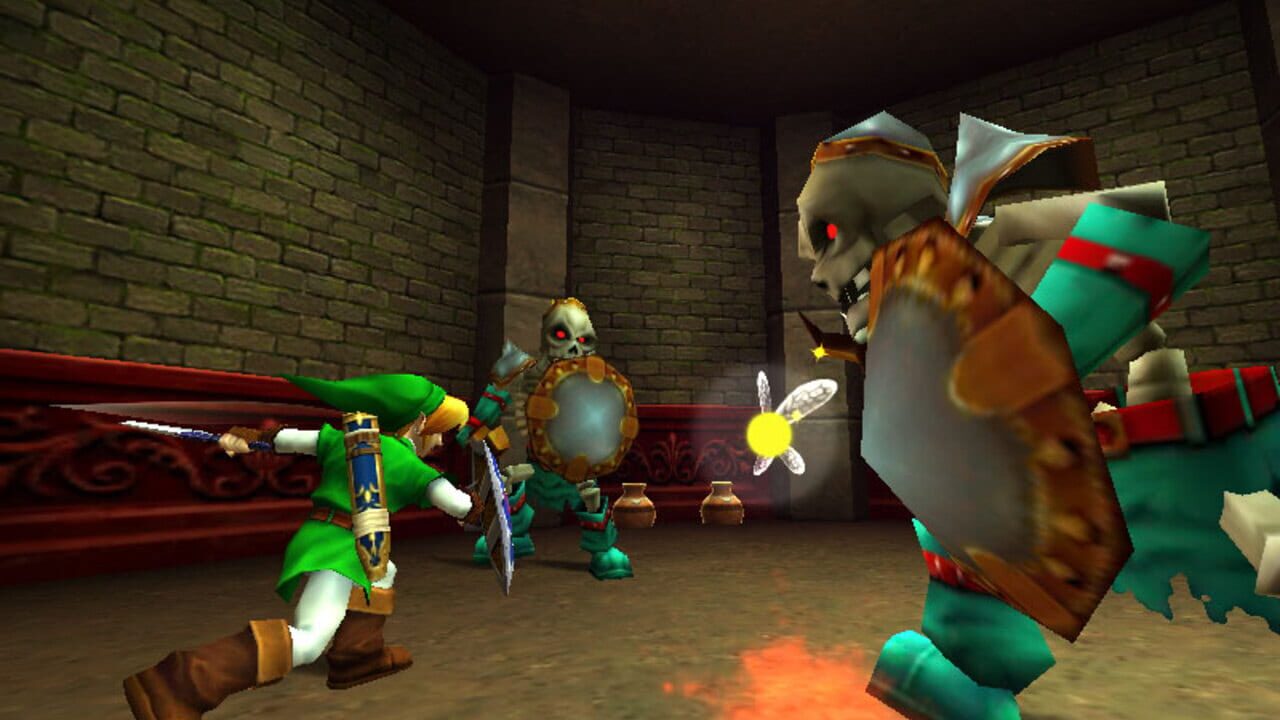
Ocarina of Time’s combat system evolved the Zelda formula by introducing weight-based sword mechanics, where Link’s weapon grew heavier as he progressed, altering attack speed and trajectory. The wooden sword, for instance, swung quickly but lacked force, while the Master Sword delivered powerful slashes but required precise timing. This progression mirrored Link’s growth, reinforcing the game’s narrative of maturation.
Dungeon puzzles often integrated combat elements, such as the Forest Temple’s Deku Baba battles, where players had to navigate shifting platforms while avoiding or defeating enemies. Boss fights exemplified the system’s depth: - Phantom Ganon (Forest Temple) tested platforming and sword accuracy, with its attacks forcing Link to dodge or counterattack in mid-air. - Morpha (Shadow Temple) required players to exploit its weakness to light, using the Light Arrows to stun it before delivering the final blow. - Ganondorf (final battle) combined swordplay with ocarina-based time manipulation, blending combat and puzzle-solving.
Each boss encounter demanded mastery of both mechanics and spatial reasoning, a hallmark of Ocarina of Time’s design. The game’s combat also introduced contextual interactions, such as grabbing enemies mid-air or using the Hookshot to pull foes into attacks, adding layers of creativity.
Design Philosophy: Insights from Eiji Aonuma and Shigeru Miyamoto
The game’s development reflected Nintendo’s commitment to player-centric design, as articulated by its creators. Eiji Aonuma, the game’s director, emphasized the importance of balancing challenge and accessibility: > "We wanted players to feel powerful when they solved a puzzle or defeated a boss, but we also didn’t want them to feel frustrated. The key was making the game’s difficulty curve feel natural, like Link’s journey itself."
Shigeru Miyamoto, the franchise’s creator, highlighted the dual-world mechanic as a narrative and gameplay necessity: > "The child and adult Link mechanics weren’t just about storytelling—they allowed us to design dungeons that felt distinct in scale and challenge. Players experience Hyrule differently at each stage of Link’s life, which reinforces the emotional weight of his journey."
These philosophies underpinned the game’s structure, ensuring that innovation served both gameplay and narrative cohesion.
Dungeon Design: Evolution from A Link to the Past to Ocarina of Time
While A Link to the Past (1991) relied on 2D overhead perspectives and linear progression, Ocarina of Time expanded dungeon design with 3D environments, dynamic camera angles, and interconnected paths. The child/adult Link mechanic introduced verticality and scale, where dungeons in the child world felt cramped and mysterious, while their adult counterparts opened into vast, labyrinthine spaces. This shift mirrored Link’s physical and emotional growth, with puzzles often requiring solutions from both perspectives (e.g., the Water Temple’s current puzzle, solvable only as an adult).
Key innovations included: - Non-linear exploration: Dungeons like the Temple of Time and Gerudo Training Grounds encouraged backtracking and revisiting, rewarding curiosity. - Environmental storytelling: The Shadow Temple’s dark, claustrophobic design contrasted with the Light World’s openness, reinforcing themes of corruption and redemption. - Puzzle integration: Mechanics such as the ocarina’s time-stopping ability or the Mirror Shield’s reflective properties became central to dungeon progression, blending gameplay and lore.
The Ocarina’s Dual Role: Gameplay Tool and Narrative Device
The ocarina was more than a time-travel device; it was a versatile gameplay mechanic that solved puzzles, altered environments, and advanced the plot. Its functions included: - Song of Storms: Raised water levels in dungeons, enabling new paths (e.g., Zora’s Domain). - Song of Time: Allowed Link to travel between child and adult timelines, a narrative cornerstone. - Epona’s Song: Summoned his horse, expanding mobility. - Time-stopping: Froze enemies mid-attack, creating opportunities for precise strikes or puzzle-solving.
The ocarina’s design reflected Miyamoto’s principle of "interactive storytelling," where objects served multiple purposes. Its musical interface—requiring players to press buttons in sequence—added a layer of challenge, ensuring mastery of the instrument was as rewarding as its narrative payoff.
Environmental Storytelling: Hyrule’s Transformation
Hyrule’s dual-world design was a masterclass in environmental storytelling. The child world introduced players to a vibrant, open-ended kingdom, while the adult world revealed its decay under Ganondorf’s rule. Key transformations included: - Kakariko Village: Peaceful in the child timeline, it became a warzone in the adult era, with the Deku Tree’s destruction symbolizing Hyrule’s fall. - Hyrule Castle: A bustling fortress in the child world, it crumbled into ruins in the adult timeline, mirroring Ganondorf’s tyranny. - Gerudo Desert: A barren wasteland in the child world, it flourished in the adult timeline after Ganondorf’s defeat, representing hope and renewal.
These changes reinforced the game’s themes of time, consequence, and resilience, using visual and auditory cues (e.g., the ocarina’s eerie echoes in the adult world) to immerse players in Link’s emotional journey.
Major Dungeons: Themes, Puzzles, and Boss Fights
Below is a comparative table of Ocarina of Time’s major dungeons, highlighting their themes, key puzzles, and boss encounters. Visual descriptions emphasize the environmental and mechanical innovations that defined each location.
| Dungeon | Theme | Key Puzzles | Boss Fight | Visual Description |
|---|---|---|---|---|
| Deku Tree | Nature and Growth |
|
King Dodongo – A fire-breathing golem that requires dodging lava geysers and exploiting its weakness to water. | A colossal, hollowed-out tree with glowing vines and floating platforms. The interior is dimly lit, with roots pulsing like veins, emphasizing organic decay. |
| Dodongo’s Cavern | Fire and Industry |
|
Phantom Ganon – A spectral warrior that phases between solid and intangible forms,
Character Development: The Heroes, Villains, and Guardians of Ocarina of TimeThe Legend of Zelda: Ocarina of Time redefined character depth in gaming by crafting protagonists, antagonists, and supporting figures whose arcs transcended traditional archetypes. Through minimalist dialogue and symbolic storytelling, the game established a narrative framework where relationships, personal growth, and moral dilemmas drove emotional resonance. Link’s transformation from a silent child to a decisive leader, Zelda’s evolution from a sheltered princess to a warrior-strategist, and Ganondorf’s descent into tyranny as the "dark mirror" of heroism became foundational elements in gaming’s lore. Supporting characters like Navi, Saria, and the Sages further enriched Hyrule’s world, embedding its history and culture into the player’s journey. The interplay between these characters—whether through betrayal, sacrifice, or unwavering loyalty—created a power struggle that mirrored the game’s central theme: the balance of the Triforce and the cost of its pursuit.Link’s Silent Evolution: From Childhood Innocence to Heroic LeadershipLink’s character arc in Ocarina of Time is a masterclass in non-verbal storytelling, relying entirely on visual cues, gameplay mechanics, and environmental interactions to convey his emotional and psychological growth. At the outset, Link is introduced as a carefree Kokiri child, raised by the Great Deku Tree and guided by Navi, his fairy companion. His naivety is evident in his playful interactions with the forest, his reluctance to leave Kokiri Forest, and his initial hesitation when confronted with adult responsibilities. This phase establishes Link’s core traits: curiosity, bravery, and an innate sense of justice, though his lack of worldly experience makes him vulnerable to manipulation. As Link transitions into his adult form, the game subtly shifts his personality through gameplay and narrative beats. His first major test—defeating Phantom Ganon in the Forest Temple—marks the beginning of his transformation. The adult Link is more composed, his movements sharper, and his decisions more deliberate. The absence of dialogue forces players to infer his emotions through his actions: the solemnity of his expression when facing the Great Deku Tree’s sacrifice, the determination in his grip on the Master Sword, or the quiet resolve during the final battle with Ganondorf. Key moments, such as his reunion with Zelda in the Temple of Time or his refusal to abandon the Zora or Gerudo tribes despite personal risk, underscore his growing sense of duty and empathy. The game’s design reinforces Link’s development through mechanical progression. Early on, his combat is rudimentary, relying on basic attacks and limited items. As he acquires the Z-targeting system, the Hookshot, and the Boomerang, his abilities expand, symbolizing his increasing confidence and adaptability. The ocarina, a recurring motif, becomes a tool of transformation—literally altering his form and metaphorically bridging gaps between childhood and adulthood, past and future. By the game’s climax, Link’s leadership is evident in his ability to unite the Sages, rally the people of Hyrule, and make the ultimate sacrifice to seal Ganondorf away. His arc culminates in a bittersweet realization: heroism requires not just strength, but wisdom and selflessness.Princess Zelda: The Strategist and Protector Beyond the ArchetypeZelda: Ocarina of Time redefined the role of Princess Zelda, shifting her portrayal from a damsel in distress to a proactive leader and guardian of Hyrule. Unlike her predecessors in the series, who often relied on Link’s intervention, this Zelda is a strategist, a sage, and a warrior. Her backstory—revealed through flashbacks and the Temple of Time—establishes her as a descendant of a long line of Hylian kings and sages, with a deep understanding of the Triforce’s power and the threat posed by Ganondorf. The game introduces Zelda in two distinct forms: as a child, playing with Link in the Temple of Time, and as an adult, wielding the power of the Triforce of Wisdom. This duality serves multiple narrative purposes. The child Zelda humanizes her, showing her playful side and hinting at her future bond with Link. The adult Zelda, however, is portrayed as a figure of authority, commanding the Sages and leading the resistance against Ganondorf. Her strategic mind is evident in her ability to anticipate Ganondorf’s moves, such as her decision to seal the Temple of Time to prevent him from obtaining the Master Sword. When Link is trapped in the adult timeline, Zelda takes on the role of the Sheik, a mysterious and skilled warrior, further blurring the lines between her regal duties and her personal strength. Zelda’s relationship with Link is a cornerstone of the game’s emotional narrative. Their bond is built on mutual respect and shared destiny, rather than romantic idealization. Zelda’s trust in Link is unwavering, even when she sends him on perilous quests, and her faith in his abilities is a driving force behind his growth. Her sacrifice—allowing herself to be captured by Ganondorf to protect Hyrule—highlights her selflessness and reinforces her role as a protector. This portrayal set a new standard for female protagonists in gaming, emphasizing agency, intelligence, and leadership over passivity.Ganondorf: The Dark Mirror and the Antithesis of HeroismGanondorf’s character is a study in contrast, embodying the opposite traits of Link while serving as a dark reflection of Hyrule’s potential corruption. As the king of the Gerudo tribe and the wielder of the Triforce of Power, Ganondorf is introduced as a charismatic but ruthless figure. His backstory, revealed through the Gerudo Town questline, paints him as a victim of circumstance—a Gerudo raised without a father, forced to prove his worth through strength and cunning. However, his motivations shift from ambition to tyranny, driven by a desire to claim the Triforce for himself and reshape Hyrule in his image. Ganondorf’s arc is one of moral decay, beginning with his initial attempt to steal the Master Sword and culminating in his declaration as king of a conquered Hyrule. His rivalry with Link is not merely physical but ideological: where Link represents hope, unity, and self-sacrifice, Ganondorf embodies greed, domination, and the exploitation of power. The game’s design reinforces this contrast through visual and auditory cues. Ganondorf’s dark armor, menacing voice, and aggressive combat style starkly contrast with Link’s agile, heroic demeanor. His castle, a fortress of spikes and shadows, is the antithesis of Hyrule’s vibrant, open landscapes. Culturally, Ganondorf’s significance extends beyond his role as a villain. He became one of gaming’s most iconic antagonists, embodying the archetype of the "power-hungry tyrant" while also serving as a cautionary tale about the dangers of unchecked ambition. His character challenges players to question the nature of heroism and villainy, as his early actions—such as his initial attempt to claim the Triforce—are not inherently evil but rather misguided. This nuance adds depth to his portrayal, making him more than a one-dimensional antagonist.Supporting Cast: World-Building Through Relationships and SacrificeThe supporting characters in Ocarina of Time are essential to the game’s world-building, each contributing to Hyrule’s culture, history, and emotional weight. Navi, Link’s fairy companion, serves as his guide and conscience, often providing exposition and comic relief. Her persistent nagging—though sometimes frustrating—humanizes Link’s journey, making his growth feel organic. Characters like Saria, the Kokiri maiden, and Rauru, the wise Zora elder, represent the diverse races of Hyrule, each with their own struggles and contributions to the narrative. Saria’s unwavering belief in Link’s heroism and Rauru’s tragic sacrifice for the Zora people add layers of emotional depth to the story. The Sages—Sheik, Rauru, Darunia, Saria, Impa, and the Great Deku Tree—are pivotal to the game’s lore and mechanics. Each Sage represents a different facet of Hyrule’s society and the Triforce’s power. Sheik, revealed to be Zelda in disguise, embodies wisdom and martial prowess, while the Great Deku Tree’s sacrifice symbolizes the cost of protecting the innocent. Darunia and Rauru’s fates—one betrayed by Ganondorf, the other destroyed by his forces—highlight the personal toll of the conflict. Impa, as Zelda’s loyal guardian, bridges the gap between the royal family and the common people, adding authenticity to Hyrule’s political landscape. The relationships between these characters drive the game’s emotional engagement. Link’s bond with Zelda is central, but his connections with Saria, the Gorons, and the Zora tribes create a sense of belonging and shared purpose. Ganondorf’s betrayal of the Sages and his manipulation of the Gerudo further humanize his villainy, making his actions feel personal rather than abstract. These interactions are not just narrative devices but integral to the game’s immersive world-building, making HyWorld-Building: Hyrule’s Geography, Lore, and Hidden SecretsThe Legend of Zelda: Ocarina of Time redefined world-building in gaming by crafting Hyrule as a living, breathing realm steeped in myth, geography, and intricate lore. Unlike open worlds that prioritize exploration for exploration’s sake, Hyrule’s design integrates cultural depth, environmental storytelling, and a dual-timeline structure that deepens immersion. Its regions—each distinct in culture, flora, fauna, and architectural style—serve as more than mere backdrops; they are characters in their own right, reflecting the game’s overarching themes of time, destiny, and the cyclical nature of history. The world’s secrets, from hidden dungeons to NPC routines tied to in-game time, reward players with a sense of discovery that transcends traditional gameplay loops. Hyrule’s geography is a masterclass in environmental narrative, where every region embodies a unique identity shaped by its people, climate, and historical significance. The contrast between the lush, mystical Kokiri Forest and the arid, nomadic Gerudo Desert, for instance, underscores the game’s commitment to cultural authenticity. Meanwhile, the parallel child and adult timelines create a dynamic where geography itself evolves, revealing hidden layers of lore and gameplay mechanics. This section explores Hyrule’s regions, their cultural influences, and the lore that binds them together, while examining how the game’s world-building techniques influence modern open-world design.Hyrule’s Major Regions and Their Cultural InfluencesHyrule’s geography is divided into distinct regions, each governed by a unique culture, ecosystem, and historical context. These areas are not merely settings but living entities that reflect the game’s overarching themes of harmony, corruption, and renewal. The design choices—from architectural styles to environmental hazards—reinforce the identity of each region while subtly hinting at their roles in the Triforce’s prophecy. Kokiri Forest Nestled in the northern reaches of Hyrule, Kokiri Forest is a sanctuary of towering trees, glowing flowers, and ethereal energy, embodying the spirit of nature and childlike wonder. The Kokiri people, a race of tree-dwelling beings with limited lifespans, live in harmony with the forest’s magic, their culture centered around the Great Deku Tree and the sacred Saria’s Song. The forest’s lush greenery contrasts sharply with the decay of the adult timeline, where the Deku Tree is reduced to a withered stump, symbolizing the loss of innocence and the passage of time. Key cultural elements include:Hyrule’s Lore: The Triforce, Prophecy, and the Role of the SagesHyrule’s lore is a tapestry of creation myths, divine prophecies, and the eternal struggle between order and chaos. At its core lies the Triforce, a divine entity split into three golden triangles—Power, Wisdom, and Courage—each representing a facet of heroism. The Triforce’s legend is woven into Hyrule’s history, beginning with its creation by the goddess Hylia, who shaped the land and bestowed the Triforce upon the chosen hero to maintain balance. The Creation of Hyrule and the Triforce According to the game’s manual and developer interviews, Hyrule was born from the tears of Hylia, who descended from the heavens to create a paradise for mortals. She forged the Triforce from her divine essence, embedding it within the Master Sword and the Temple of Time. The prophecy of the Hero of Time was established to ensure that when Ganon sought to claim the Triforce of Power, a hero would emerge to wield the Triforce of Courage and restore balance. This mythological framework provides Hyrule with a sense of destiny, where every generation is bound by the same cycle of corruption and redemption. The Sages and the Seven Temples The Seven Sages, wise beings who embody the elements of nature, play a crucial role in maintaining Hyrule’s stability. Each Sage guards a temple dedicated to an elemental force—Fire, Water, Forest, Shadow, Wind, Light, and Spirit—and their combined wisdom is required to seal Ganon away. Their locations across Hyrule’s regions reflect the game’s emphasis on balance:The Legend of Zelda: Ocarina of Time remains more than a game; it is a testament to how artistry and technology can converge to create something timeless. Its legacy persists in the way modern titles approach world design, character arcs, and even the role of music in immersion. Nearly three decades later, Hyrule’s forests, dungeons, and deserts continue to inspire, proving that greatness in gaming is not measured by graphics alone but by the depth of its storytelling, the brilliance of its mechanics, and the emotional resonance it leaves on players. This is not just a game—it is a masterclass in what interactive entertainment can achieve. |
Leave a Comment
Comments are moderated before appearing. The data you submit is processed according to the Privacy Policy of Inhonorofdesign.