Star and stripe nude Instant Download artistic fusion and market mastery
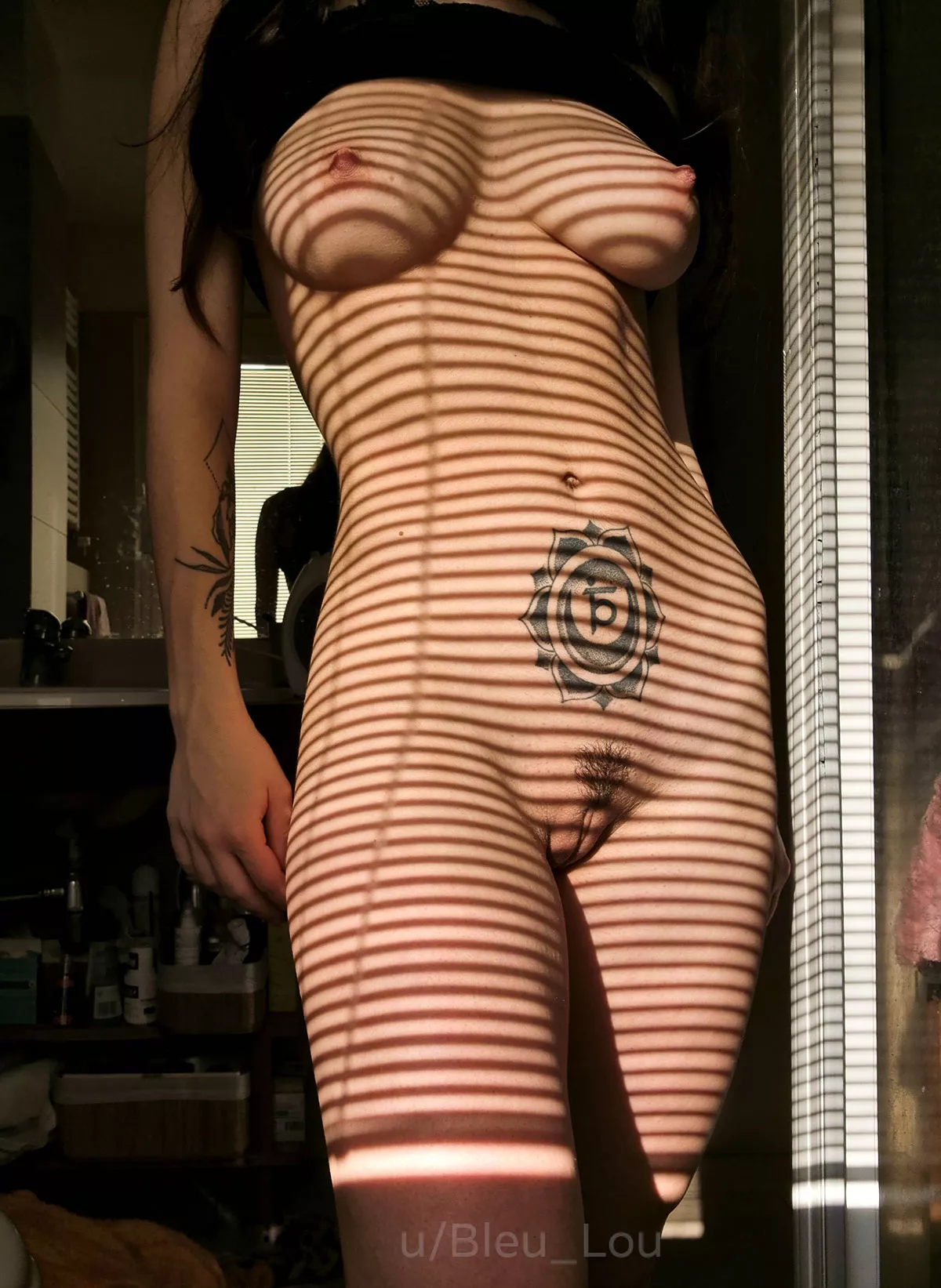
The intersection of celestial motifs and bold geometric patterns has long captivated artists, yet few have harnessed their full potential in nude photography as a marketable digital asset. Star and stripe nude Instant Downloads represent more than just visual appeal—they embody a fusion of historical symbolism, technical precision, and ethical storytelling that resonates with collectors, educators, and creatives alike. From the ethereal glow of backlit starbursts to the rhythmic precision of striped compositions, these themes transform the human form into a canvas where light, texture, and narrative collide.
Behind every striking star and stripe nude photograph lies a deliberate process—one that balances artistic vision with legal safeguards and strategic marketing. Whether exploring the cultural roots of these motifs in movements like Pop Art or mastering the technical nuances of lighting and post-processing, photographers who specialize in this niche navigate a landscape where creativity meets commercial viability. The challenge lies not only in crafting visually compelling content but also in ensuring its distribution aligns with platform policies, ethical standards, and audience expectations, all while standing out in a saturated digital marketplace.
The Artistic and Cultural Significance of Star and Stripe Motifs in Nude Photography
The interplay between artistic symbolism and human form has long been a cornerstone of visual storytelling. In nude photography, motifs like stars and stripes transcend mere decoration, embedding compositions with layers of meaning that resonate culturally, historically, and emotionally. Stars, often associated with celestial guidance and divine inspiration, have been woven into artistic traditions for millennia, while stripes—evoking rhythm, movement, and structure—offer a dynamic contrast to the organic fluidity of the human body. Together, these elements create a visual language that elevates nude photography from mere representation to profound narrative. Understanding their evolution in art movements reveals how they shape contemporary interpretations, particularly in digital formats like the Star and Stripe Nude Instant Download, where geometric precision meets raw human expression.
Historical and Cultural Roots of Stars and Stripes in Visual Art

The use of stars and stripes in art is deeply rooted in human psychology and cultural symbolism. Stars, as celestial bodies, have historically symbolized hope, guidance, and the divine across civilizations. Ancient Egyptians associated stars with the gods Ra and Osiris, while in Greek mythology, stars represented the souls of heroes immortalized in the night sky. Stripes, conversely, have served as markers of hierarchy, movement, and rhythm—visible in everything from the zebra’s stripes (a natural camouflage) to the structured patterns of Islamic geometry and the bold lines of African Adinkra symbols. In Western art, stripes emerged as a recurring motif during the Renaissance, where they were used to create depth and perspective in architectural paintings. By the 19th century, stars and stripes became embedded in national and political symbolism, most notably in the American flag, where they represent unity and freedom.
The fusion of these motifs in nude photography draws from this rich heritage, transforming abstract symbols into tangible narratives. Stars often frame the human body as a celestial being, while stripes dissect form into rhythmic segments, highlighting both the vulnerability and strength of the subject. This duality is particularly potent in modern nude photography, where the tension between structure and organic form creates a dialogue between the viewer and the artwork.
Stars and Stripes in Iconic Art Movements and Their Translation to Nude Photography
The evolution of stars and stripes in art reflects broader shifts in cultural and philosophical thought. Below are key movements where these motifs played a pivotal role, along with their influence on nude photography:
Table of Contents
- The Artistic and Cultural Significance of Star and Stripe Motifs in Nude Photography
- Historical and Cultural Roots of Stars and Stripes in Visual Art
- Stars and Stripes in Iconic Art Movements and Their Translation to Nude Photography
- Symbolic Meanings of Stars and Stripes in Nude Artworks
- Notable Artists and Their Use of Stars and Stripes in Nude Compositions
- The Technical and Creative Process: Crafting Star and Stripe Nude Photography
- Conceptualization and Pre-Production Planning
- Lighting Techniques to Emphasize Stars and Stripes
- Integrating Props Without Forced Aesthetics
- Post-Processing Enhancements for Motifs
- Balancing Minimalism and Maximalism in Compositions
- Common Mistakes and Solutions in Star-and-Stripe Nude Photography
- Legal and Ethical Considerations in Selling and Sharing Star and Stripe Nude Photography
- Legal Frameworks Governing Nude Photography Sales and Distribution
- Essential Legal Documents for Selling Star and Stripe Nude Content
- Ethical Considerations in Nude Photography: Consent, Diversity, and Representation
- Protecting Digital Downloads: Watermarking and Anti-Piracy Strategies
- Platform-Specific Policies and Seller Recommendations
- Marketing and Audience Engagement: Promoting Star and Stripe Nude Instant Downloads
- Target Audiences and Tailored Marketing Messages
- Creating SEO-Friendly and Visually Appealing Product Listings
- Compelling Product Descriptions with Platform Compliance
- Leveraging Social Media for Promotion
Stars and stripes have been reimagined across art movements, each offering a distinct lens through which to view the human form. In Impressionism, artists like Pierre-Auguste Renoir used stars to evoke the fleeting beauty of night scenes, often placing them in compositions where the human figure was bathed in moonlight—a technique that later photographers adopted to create ethereal nude portraits. Pop Art, exemplified by Roy Lichtenstein, stripped stars and stripes of their symbolic weight, reducing them to bold, mass-produced icons. This approach influenced contemporary nude photography by emphasizing the body as a canvas for modern, often ironic, visual statements. Meanwhile, Abstract Expressionism, with artists like Jackson Pollock, employed stripes as a means to convey emotional turbulence, a strategy that nude photographers use to explore the raw, unfiltered essence of the human experience.
The translation of these motifs into nude photography often involves a play between abstraction and figuration. Stars may serve as halos or constellations mapping the body’s contours, while stripes can dissect the figure into dynamic segments, blurring the line between anatomy and geometry. This interplay is evident in works where the body becomes both subject and symbol, inviting viewers to decode layers of meaning beyond the physical.
Symbolic Meanings of Stars and Stripes in Nude Artworks
The symbolic weight of stars and stripes in nude photography lies in their ability to imbue the human form with additional dimensions of meaning. Stars, with their associations to the cosmos, often elevate the subject to a divine or transcendent plane. In many cultures, stars represent guidance, destiny, and the eternal, making them a powerful tool for photographers seeking to convey themes of spirituality or existential reflection. For instance, a nude figure positioned beneath a star-studded sky may evoke a sense of connection to the universe, while a single star placed strategically on the body—such as on the forehead or chest—can symbolize enlightenment or inner light.
Stripes, on the other hand, introduce a contrasting dynamic. Their linear nature suggests movement, rhythm, and structure, often used to fragment the body into rhythmic patterns that highlight both its physicality and fragility. Stripes can also evoke duality—light and shadow, strength and vulnerability—creating a tension that draws the viewer’s eye across the composition. In some cases, stripes serve as a metaphor for societal constructs, such as gender norms or cultural expectations, challenging the viewer to reconsider the boundaries of the human form.
The combination of these motifs in nude photography creates a visual language that is at once universal and deeply personal. A star-strewn background paired with striped patterns on the body might suggest a journey—both physical and spiritual—where the individual is both guided by cosmic forces and shaped by earthly rhythms.
Notable Artists and Their Use of Stars and Stripes in Nude Compositions
The integration of stars and stripes into nude art has been explored by numerous artists across disciplines, each offering a unique perspective on how these motifs enhance the narrative of the human form. Below is a comparative table highlighting five notable examples, illustrating the diverse ways these elements have been employed:
| Artist Name | Artwork Title | Year of Creation | Significance of Star/Stripe Motifs in the Piece | |||||||||||||
|---|---|---|---|---|---|---|---|---|---|---|---|---|---|---|---|---|
| Gustav Klimt | The Kiss (section of the background) | 1907–1908 | Klimt’s use of golden stars and swirling patterns in The Kiss transforms the lovers into celestial beings, merging earthly passion with cosmic harmony. The stars in the background serve as a metaphor for divine love and eternal union, elevating the nude figures beyond mere physicality. While not strictly stripes, the organic, rhythmic lines in his work laid the groundwork for later artists to explore geometric contrasts in nude photography. | |||||||||||||
| Roy Lichtenstein | Brushstroke (series) | 1965 | Lichtenstein’s bold, comic-book-inspired stripes and stars in his Brushstroke series deconstruct the nude form into a series of graphic elements. His work challenges traditional notions of beauty, using stripes to create a rhythmic dissection of the body that mirrors the mechanical precision of mass media. The stars, often reduced to simplistic dots, serve as punctuation within the composition, reinforcing the Pop Art ethos of irony and detachment. | |||||||||||||
| Henri Matisse | The Dance (cut-outs, later influence on photography) | 1909–1910 | Though not a nude work, Matisse’s The Dance exemplifies how stripes and dynamic lines can convey movement and energy. His later cut-outs, which feature black silhouettes against vibrant backgrounds, influenced photographers to use stripes as a means of fragmenting and recomposing the body in ways that emphasize fluidity and rhythm. Stars, though less prominent, appear in his later works as symbolic markers of joy and liberation. | |||||||||||||
| Helmut Newton | Big Nudes (series, e.g., Sonia) | 1980s–1990s | Newton’s photographs often feature geometric patterns, including stripes and star-like reflections, to create a fusion of high fashion and eroticism. In works like Sonia, stripes dissect the body into sharp, angular segments, while reflective surfaces mimic stars, adding a surreal, almost otherworldly quality. His use of these motifs transforms the nude into a statement of power and modern femininity, stripped of traditional romanticism. | |||||||||||||
The Technical and Creative Process: Crafting Star and Stripe Nude PhotographyNude photography that integrates star and stripe motifs transforms the human form into a canvas of geometric poetry, blending anatomical precision with symbolic abstraction. The technical and creative execution of such imagery demands a fusion of conceptual clarity, meticulous lighting, intentional prop usage, and post-processing finesse. This process begins with a structured approach to ideation, progresses through the strategic manipulation of visual elements during the shoot, and concludes with digital enhancements that amplify the thematic depth. Mastering these stages ensures that the final images resonate with both artistic integrity and technical sophistication, avoiding common pitfalls that undermine cohesion or authenticity.Conceptualization and Pre-Production PlanningThe foundation of a successful star-and-stripe nude photography series lies in pre-production, where conceptualization bridges artistic vision with logistical feasibility. Photographers must first define the narrative or emotional tone of the project—whether it leans toward celestial mysticism, urban grit, or minimalist abstraction. For instance, a series inspired by cosmic themes might incorporate star constellations mapped onto the body, while a retro-futuristic approach could juxtapose neon stripes against a monochromatic backdrop. Research into historical and cultural references—such as the Bauhaus movement’s geometric abstraction or Art Deco’s bold patterns—can inform compositional choices, ensuring the motifs feel intentional rather than arbitrary. A mood board serves as a visual blueprint, compiling references for lighting, color palettes, and prop textures. Tools like Pinterest or digital sketchbooks help organize these elements, while location scouting identifies spaces that naturally complement the theme. Studios with adjustable backdrops or urban settings with architectural lines (e.g., fire escapes, brick walls) can enhance stripe motifs, while darkroom-like environments or starry skies (simulated via projectors) support celestial themes. Collaborating with models to explore pose studies that accentuate the body’s natural lines—such as elongated limbs for stripes or curved poses for star-like shapes—further refines the conceptual direction.Lighting Techniques to Emphasize Stars and StripesLighting is the most critical tool for translating star and stripe motifs into tangible visuals, as it dictates texture, contrast, and mood. Chiaroscuro, the dramatic play of light and shadow, is particularly effective for creating high-contrast stripe patterns along the body. By positioning a hard light source (e.g., a strobe or LED panel) at a low angle, photographers can cast sharp, directional shadows that mimic the precision of mechanical stripes. For example, a single Rembrandt lighting setup—where light hits one side of the face and body, creating a triangular shadow—can emphasize the asymmetry of stripes when combined with reflective surfaces like metallic foil draped over the model. Backlighting transforms the human form into a silhouette or luminous outline, ideal for star motifs. Using a diffused light source (e.g., a softbox or LED strip) behind the model creates a glow effect, while pinhole lights or fiber optic stars projected onto the skin add celestial texture. Neon lighting introduces a futuristic or surreal quality, especially when paired with blacklight-reactive fabrics or UV-painted stripes. Photographers can experiment with color temperature shifts—cool blues for a cosmic feel, warm oranges for a retro vibe—to align with the series’ tone. For instance, a split lighting technique, where one side of the body is lit with cool tones and the other with warm, can simulate the duality of stars and stripes as both celestial and terrestrial elements.Integrating Props Without Forced AestheticsProps serve as visual anchors, reinforcing motifs while maintaining the integrity of the nude form. The key lies in subtle integration, ensuring elements feel organic rather than superimposed. For star motifs, star-shaped mirrors or constellation projectors can reflect light onto the body, creating dynamic patterns without physical contact. Metallic foils—such as crumpled aluminum or mylar—can be draped over limbs or torsos to mimic galactic textures, while starburst cutouts in backdrops add depth when diffused lighting is used. Translucent fabrics with embedded LED stars or holographic films further enhance ethereal effects, particularly in low-light conditions. Stripes introduce a structural dimension to compositions. Striped fabrics (e.g., satin, latex, or metallic) can be wrapped around limbs, torsos, or used as backdrop textures, with varying widths to create rhythm. Anamorphic projections—where stripe patterns are projected onto the body at oblique angles—distort perspective, adding a surreal edge. For minimalist approaches, a single stripe (e.g., a painted line or adhesive tape) along the spine or collarbone serves as a focal point, while maximalist setups might layer multiple striped fabrics or geometric overlays in post-production. The challenge is to avoid clutter; photographers should prioritize negative space and ensure props complement the body’s natural lines rather than compete with them.Post-Processing Enhancements for MotifsDigital post-processing elevates raw captures into polished artworks, allowing photographers to refine motifs with precision. In Adobe Lightroom, adjustments to contrast, clarity, and shadow recovery sharpen stripe definitions, while split-toning can accentuate metallic or neon elements. For instance, cool cyan tones on shadows and warm gold highlights can mimic the glow of stars, whereas high-contrast black-and-white conversions emphasize the graphic quality of stripes. In Photoshop, layer masks enable non-destructive edits—such as painting in star constellations using the Brush Tool (Hard Round) or applying texture overlays (e.g., grain or noise) to simulate film grain in celestial imagery. Selective sharpening with the Unsharp Mask filter enhances the edges of stripes, while dodge and burn techniques sculpt light to mimic projected patterns. For maximalist compositions, cloning or healing tools can seamlessly blend additional stripe layers or star motifs into the background. Custom brushes—created from scanned textures or hand-drawn elements—allow for hand-painted details, such as glowing cracks or fractal-like starbursts. However, over-editing risks losing the organic feel of the nude form; photographers should aim for subtle enhancements that feel like an extension of the shoot’s vision.Balancing Minimalism and Maximalism in CompositionsThe tension between minimalism and maximalism defines the visual language of star-and-stripe nude photography. Minimalist compositions rely on negative space and simplicity, where a single motif dominates. For example:Common Mistakes and Solutions in Star-and-Stripe Nude Photography
|
Leave a Comment
Comments are moderated before appearing. The data you submit is processed according to the Privacy Policy of Inhonorofdesign.