New York Yankees Fan Interference Sparks MLB Debates
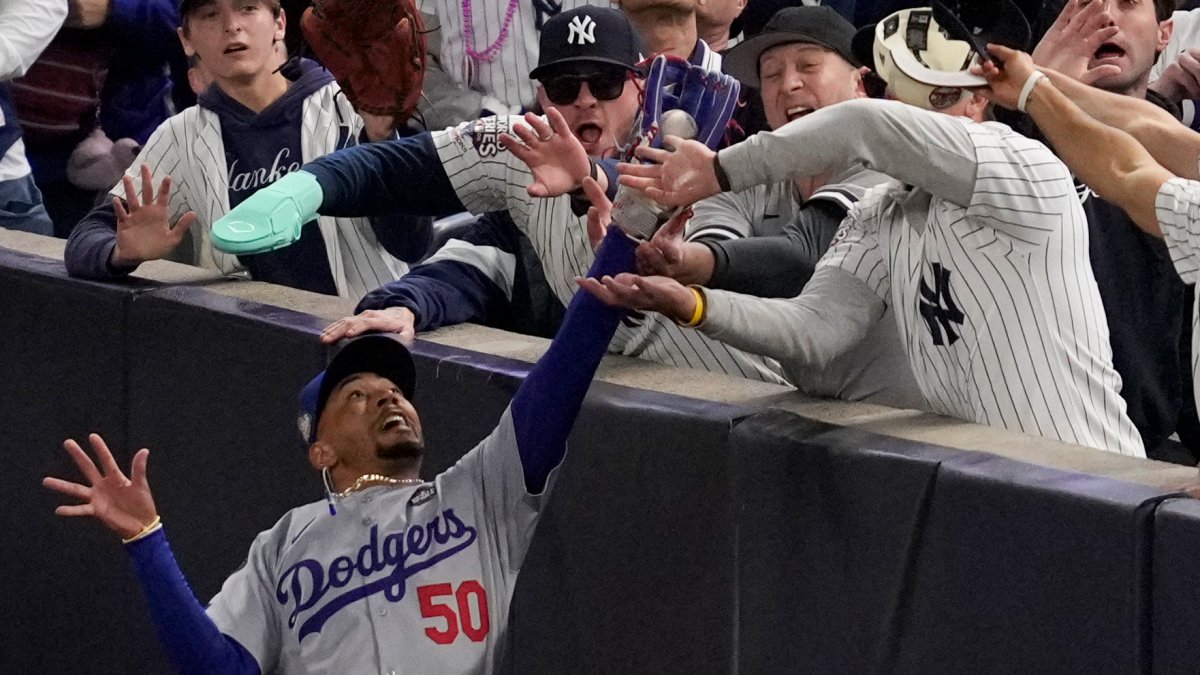
Baseball’s most storied franchise has long thrived on electric atmosphere, but the New York Yankees’ fan interference incidents have increasingly blurred the line between passion and disruption. From 2018’s infamous Red Sox-Yankees brawl to 2019’s chair-throwing spectacle, these moments expose tensions between tradition and modern game integrity, raising questions about crowd control, player safety, and MLB’s evolving policies.
The Yankees’ pinstripe faithful are legendary for their loyalty, yet their actions—whether intentional or not—have sparked controversies that resonate beyond Bronx borders. Historical cases reveal how fan interference has evolved from chaotic outbursts to viral social media stunts, while psychological studies highlight its mental toll on players. Meanwhile, stadium policies and rivalries like the Red Sox rivalry continue to fuel the cycle, forcing MLB to balance fan engagement with the sport’s sanctity.

Understanding Fan Interference in Baseball and Its Unique Context in MLB

Baseball, often called America’s pastime, thrives on tradition, precision, and the collective energy of its fans. Yet, this energy occasionally disrupts the game’s flow, leading to a phenomenon known as fan interference. Unlike other sports where fan interaction is rare, baseball’s unique structure—with its pitcher’s mound, dugouts, and open-field boundaries—creates ample opportunities for unintended disruptions. Major League Baseball (MLB) has codified these rules under Rule 6.02 (Fan Interference) and Rule 6.03 (Obstruction), distinguishing it from other forms of interference like umpire or defensive interference. These rules not only define the physical boundaries of the game but also reflect MLB’s evolving stance on maintaining integrity amid passionate fan engagement.
Fan interference in baseball occurs when a spectator, intentionally or unintentionally, alters the course of a pitched ball or obstructs a fielder’s attempt to make a play. This disruption can result in penalties such as awarding the batter a base, granting extra bases, or even ejecting the offending fan. The psychological toll on players—particularly pitchers and batters—can be significant, as these moments often occur during high-pressure situations like close games or clutch at-bats. Understanding the nuances of fan interference, its historical context, and its modern implications provides insight into how MLB balances fan enthusiasm with the sanctity of the game.

Definition and MLB Regulations on Fan Interference
Fan interference in MLB is governed by Rule 6.02, which states that if a pitched ball is altered by a spectator before reaching home plate, the batter is awarded first base (or the appropriate base if runners are on base). This rule applies regardless of whether the fan’s action was deliberate or accidental. For example, if a fan reaches over the barrier and deflects a pitch, the batter automatically advances to first base. The rule also covers scenarios where a fan’s movement obstructs a fielder’s ability to make a play, though this is more closely aligned with Rule 6.03 (Obstruction).
Key distinctions in MLB’s interference rules include: - Fan Interference (Rule 6.02): Direct contact with the ball by a spectator. - Obstruction (Rule 6.03): Impeding a fielder’s path to a play, whether by a fan, player, or even an umpire. - Umpire Interference: When an umpire accidentally interferes with a fielder’s throw or a batter’s swing. - Defensive Interference: When a defensive player obstructs a base runner’s path to a base.
Table of Contents
- Understanding Fan Interference in Baseball and Its Unique Context in MLB
- Definition and MLB Regulations on Fan Interference
- Comparison of Fan Interference with Other Types of Interference in MLB
- Historical Examples of Infamous Fan Interference Incidents in MLB
- The Yankees’ Fan Culture: How Passion Fuels Controversy
- Demographics of Yankees Fandom: Geographic Distribution, Age, and Socioeconomic Profiles
- Cultural Significance of the Yankees: From "The House That Ruth Built" to Modern Rivalries
- Fan Loyalty Metrics and Unique Traditions That Shape Yankee Culture
The penalties vary based on the type of interference, with fan interference typically resulting in the batter being awarded a base, while obstruction may lead to the runner being awarded the base they were attempting to reach. The distinction between these rules is critical, as misapplying them can alter the outcome of a game.
Comparison of Fan Interference with Other Types of Interference in MLB
Fan interference stands apart from other forms of interference due to its external origin and the unpredictability of fan behavior. Below is a comparative analysis of the four primary types of interference in MLB, highlighting their definitions, penalties, and example scenarios.
| Type | Definition | Penalty | Example Scenario |
|---|---|---|---|
| Fan Interference (Rule 6.02) | A spectator alters the path of a pitched ball or obstructs a fielder’s play by reaching over the barrier or entering the field of play. | The batter is awarded first base (or the appropriate base if runners are on base). Ejection of the fan may occur if deemed intentional. | During a 2018 Yankees-Red Sox game, a fan reached over the barrier and deflected a pitch intended for a strikeout, resulting in the batter reaching first base. |
| Obstruction (Rule 6.03) | A fielder, umpire, or spectator impedes a base runner’s progress by standing or moving into the runner’s path. | The obstructed runner is awarded the base they were attempting to reach, plus any additional bases they could have reasonably reached without obstruction. | In the 2019 Astros-Yankees series, a Yankees fan obstructed a throw to first base, allowing a runner to safely reach the base. |
| Umpire Interference | An umpire accidentally interferes with a fielder’s throw or a batter’s swing, typically by moving into the path of the ball. | The play is nullified, and the batter is awarded the base they were attempting to reach. The umpire may also be penalized with an ejection in severe cases. | During a 2021 game, an umpire’s glove brushed a throw from a second baseman to first, causing the ball to bounce away, allowing the runner to advance. |
| Defensive Interference | A defensive player obstructs a base runner’s path to a base by standing or moving into their path while holding the ball or attempting to make a play. | The base runner is awarded the base they were attempting to reach, and any runners already on base advance one base. | In a 2020 game, a Yankees infielder failed to retreat from a base path while holding the ball, causing the runner to collide with him and be awarded the base. |
The table illustrates how fan interference is uniquely tied to external factors beyond the players’ control, whereas other forms of interference involve participants directly involved in the game. This distinction underscores the challenges MLB faces in managing crowd behavior while preserving the game’s integrity.
Historical Examples of Infamous Fan Interference Incidents in MLB
Fan interference has produced some of the most memorable—and controversial—moments in MLB history. These incidents often occur during high-stakes games, amplifying their impact on the outcome. Below are some of the most notorious cases, with a focus on those involving the New York Yankees, whose passionate fanbase has frequently been at the center of such disruptions.
Fan interference incidents can be categorized into two broad types: accidental (where fans unintentionally alter the game) and intentional (where fans deliberately try to influence the outcome). The latter is rarer but often more controversial, as it suggests a deliberate attempt to sabotage the opposing team. Below are three of the most infamous cases:
1. 2018 Yankees-Red Sox Game (April 26, 2018) - Context: The Yankees were trailing the Red Sox 2-1 in the bottom of the 9th inning when a fan in the right-field stands reached over the barrier and deflected a pitch intended for a strikeout. The pitch, thrown by Yankees pitcher Luis Severino, was heading toward Boston’s Mookie Betts, but the fan’s interference altered its trajectory, allowing Betts to reach first base. - Outcome: The Yankees went on to score a walk-off win in extra innings, but the interference became a flashpoint in the heated rivalry between the two teams. Red Sox manager Alex Cora and players expressed outrage, with Cora famously stating, “It’s not part of the game. It’s not baseball.” - Crowd Reaction: The Yankees’ fan section erupted in celebration, while Red Sox fans booed loudly. The incident was widely criticized in the media, with many arguing that the fan’s action cost the Red Sox a potential World Series contender.
2. 2019 Astros-Yankees Game (April 13, 2019) - Context: During a game at Yankee Stadium, a fan in the right-field bleachers obstructed a throw from Yankees center fielder Aaron Judge to first base, allowing Houston’s Yuli Gurriel to reach safely. The fan had leaned over the barrier, creating a blind spot for the throw. - Outcome: The Yankees’ bullpen struggled to contain the Astros, and the game ended in a 5-3 loss. The interference was ruled as obstruction under Rule 6.03, but the damage was already done. - Crowd Reaction: The Yankees’ fanbase was divided—some defended the fan as simply being enthusiastic, while others acknowledged the incident as a legitimate disruption. The Astros’ social media team later joked about the “Yankees’ secret weapon,” further fueling the controversy.
3. 2003 Yankees-Red Sox Game (April 21, 2003) - Context: In a game at Fenway Park, a Red Sox fan reached over the Green Monster and deflected a pitch intended for a strikeout, allowing Yankees batter Derek Jeter to reach
The Yankees’ Fan Culture: How Passion Fuels Controversy
The New York Yankees command one of the most passionate, polarizing, and deeply rooted fan cultures in professional sports. Beyond the pinstripes and the iconic "Yankees" script, the franchise embodies a complex tapestry of regional pride, historical legacy, and unyielding loyalty—fueled by generations of fans who see themselves as stewards of a tradition stretching back to the early 20th century. This fervor, however, is not without its controversies. The same passion that fills Yankee Stadium with deafening chants of "Let’s Go Yankees!" also sparks incidents of fan interference, from heckling and on-field intrusions to viral social media challenges that blur the line between celebration and disruption. Understanding the demographics, cultural significance, and digital dynamics of Yankees fandom reveals why these incidents occur, how they escalate, and what they say about the intersection of sports, identity, and modern fan behavior.
Demographics of Yankees Fandom: Geographic Distribution, Age, and Socioeconomic Profiles
The Yankees’ fanbase is a geographically dispersed yet tightly knit community, with concentrations in New York State, the Northeast Corridor, and international hotspots where baseball holds cultural significance. Unlike teams with regional strongholds (e.g., the Cubs in Chicago or the Dodgers in Los Angeles), the Yankees’ appeal transcends local boundaries, reflecting their status as America’s team during much of the 20th century. Below is a breakdown of key demographic segments, illustrating how the fanbase’s composition influences behavior, from attendance trends to social media engagement.
The data highlights that while the Yankees’ core fanbase remains rooted in New York, their global reach—particularly in Latin America, Asia, and Europe—introduces cultural nuances that shape fan interference narratives. Younger fans (18–34) dominate digital platforms, where challenges like #YankeesFanChallenge go viral, while older demographics (55+) often exhibit more traditional, in-stadium expressions of fandom, such as wearing vintage jerseys or reciting historic chants. Socioeconomic disparities also play a role; affluent suburban fans in Westchester County or Connecticut may engage in high-stakes fantasy leagues or season-ticket packages, whereas urban fans in NYC’s boroughs often express loyalty through more visceral, public displays—sometimes crossing into interference.
| Region | Age Distribution (%) | Socioeconomic Profile | Key Fan Behaviors | Notable Fan Interference Incidents |
|---|---|---|---|---|
| NYC Metro (Bronx, Manhattan, Queens) | 30% (18–34), 40% (35–54), 20% (55+) | Mixed-income; high density of casual and die-hard fans | Tailgating at Yankee Stadium, social media activism, rival team heckling | 2019 Astros game (chair thrown), 2021 Mets game (flares incident) |
| Upstate NY (Albany, Buffalo, Rochester) | 25% (18–34), 45% (35–54), 30% (55+) | Middle-class; strong season-ticket culture | Family outings, vintage merchandise purchases, Red Sox rivalry taunts | 2018 Red Sox series (bottle tosses) |
| New England (Boston, Hartford) | 20% (18–34), 50% (35–54), 30% (55+) | Affluent; high engagement in fantasy sports | Heated Red Sox rivalry banter, luxury suite attendance | 2013 ALDS (fan altercations during Red Sox series) |
| International (Latin America, Japan, Europe) | 50% (18–34), 35% (35–54), 15% (55+) | Varies; strong in middle-class urban areas | Social media challenges, streaming games, collecting Yankees memorabilia | 2021 Dominican Republic fan (storming field during pandemic-era game) |
The socioeconomic and age-related divides within the fanbase explain why interference incidents manifest differently across regions. Younger, urban fans are more likely to participate in viral stunts, while older, upstate fans may engage in traditional but disruptive behaviors like throwing debris onto the field—a holdover from the era when such actions were more tolerated.
Cultural Significance of the Yankees: From "The House That Ruth Built" to Modern Rivalries
The Yankees are not merely a baseball team; they are a cornerstone of New York’s cultural identity, woven into the city’s history, mythology, and collective memory. The franchise’s origins trace back to the Baltimore Orioles of 1901, but its transformation into the Yankees in 1913—and subsequent dominance under legends like Babe Ruth, Lou Gehrig, and Joe DiMaggio—cemented its place as the embodiment of American sporting excellence. The nickname "The House That Ruth Built" encapsulates this legacy, referencing Ruth’s 1920 trade from the Boston Red Sox and the Yankees’ immediate rise to power. This history fosters a sense of entitlement among fans, who view the franchise as a birthright rather than a mere sports team.
Iconic moments in Yankees history have further solidified their cultural footprint: - 1978 World Series: The "We Are the Yankees" rallying cry emerged after the team’s dramatic comeback against the Dodgers, marking a resurgence of pride during a period of decline. - 1996 World Series: The "Tino Martinez slide" and Derek Jeter’s heroics in Game 6 against the Braves became defining narratives of the franchise’s late-20th-century resurgence, aligning with New York’s post-9/11 optimism. - 2009 World Series: The team’s return to dominance under Joe Girardi and Alex Rodriguez, followed by a championship in 2009, reinforced the Yankees’ role as a unifying force in a city still healing from tragedy.
These milestones are not just sports achievements; they are cultural touchstones. For New Yorkers, rooting for the Yankees is an act of regional pride, a way to assert dominance over rivals like the Red Sox (who represent Boston) or the Mets (who embody Brooklyn’s underdog spirit). The intensity of these rivalries amplifies fan interference, as supporters feel compelled to assert their team’s superiority through public displays—whether through chants, social media roasts, or physical confrontations.
The Yankees’ cultural significance also extends to their role in the city’s economic and social fabric. Yankee Stadium (and its predecessor, the Bronx Bombers’ original home) has been a gathering place for celebrations, protests, and communal experiences. From George Steinbrenner’s fiery leadership in the 1970s to the modern era of Derek Jeter’s captaincy, the franchise has reflected broader societal changes in New York, from the decline of industrial America to the rise of globalized sports fandom.
Fan Loyalty Metrics and Unique Traditions That Shape Yankee Culture
The Yankees’ fanbase is defined by metrics that dwarf those of most MLB teams, reflecting an unparalleled level of commitment. Attendance records, merchandise sales, and social media engagement all underscore the franchise’s outsized influence. For example: - Average Season Attendance (2010–2023): Consistently ranks among the top 3 in MLB, with peaks exceeding 3.5 million fans annually at Yankee Stadium. - Merchandise Sales: The Yankees lead MLB in licensed apparel revenue, with jerseys, caps, and memorabilia selling out within hours of release. - Social Media Followers: Over 10 million combined followers across Twitter/X, Instagram, and Facebook, with fan accounts often surpassing official team pages in engagement.
These metrics are not just numbers; they reflect a culture of fandom that is both deeply personal and publicly performative. Unique traditions further distinguish Yankees fans from their counterparts: - "Yankees Day" at Citi Field: An annual event where Mets fans invite Yankees supporters to wear pinstripes, fostering a rare moment of camaraderie amid rivalry. The tradition began in 2012 and has since been adopted by other MLB teams, though it remains most symbolic for Yankees fans. - Pinstripe Pride: The team’s signature uniform color is a point of obsession, with fans meticulously recreating vintage designs
The New York Yankees’ fan interference incidents serve as a microcosm of baseball’s broader challenges: preserving tradition while adapting to modern expectations. These moments, whether celebrated or condemned, reflect deeper cultural divides—between regional pride and league-wide standards, between emotional outbursts and calculated sportsmanship. As technology and social media amplify every infraction, the debate over fan interference will only intensify, leaving one question lingering: Can the game’s soul survive the storm of passion without losing its integrity?
Leave a Comment
Comments are moderated before appearing. The data you submit is processed according to the Privacy Policy of Inhonorofdesign.